

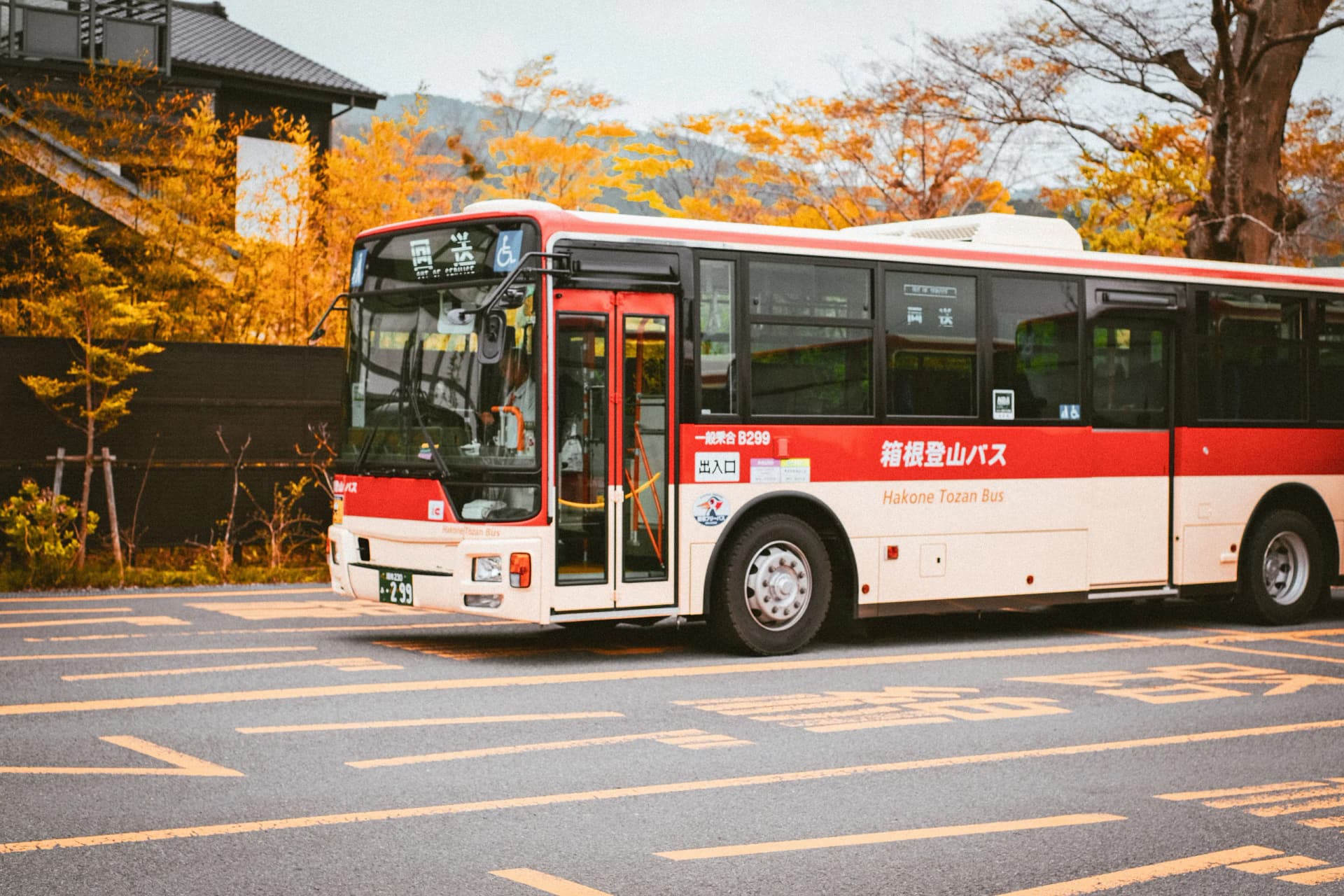
Japan Bus Fares: How to Board, Pay, and Get Off
Japan's buses are not difficult once you know the pattern. The confusing part is that the pattern changes by city, route, and bus company: sometimes you pay when you board, sometimes when you leave, and the door you use can change too.
Affiliate disclosure: Some links in this article may earn Japan Trip Planners a commission at no extra cost to you. Recommendations are included when they are genuinely useful for planning, and you should still compare current prices, terms, and official provider information before booking.
How do bus fares work in Japan?
Bus fares in Japan are either a flat amount for the whole route or based on the distance traveled. Depending on the operator, you may pay when boarding or when exiting, enter through the front or rear door, and use cash, a numbered paper ticket, or a compatible IC card. Check the signs and watch the passengers ahead of you because there is no single national boarding pattern.
In one city, you may enter at the front, pay a flat fare immediately, and exit from the back. In another place, you may enter from the rear door, take a numbered ticket, ride for several stops, then pay the calculated fare at the front when you leave. On another route, you may tap an IC card when you board and tap again when you exit.
The best first rule is simple: watch what other people are doing before boarding. Look at which door the line uses, whether passengers tap a card, whether they take a small ticket, and whether anyone is paying as they enter. That one moment of observation usually tells you more than trying to decode every sign while the bus is arriving.
The two main fare systems: flat fare and distance fare
Most local buses use either a flat fare or a distance-based fare. A flat-fare bus charges the same amount no matter how far you ride within that route or zone. These are common in some city centers and tourist-heavy routes because they are simpler for short urban trips.
A distance-based bus charges more the farther you ride. These buses often have a numbered-ticket system. When you board, you take a small paper ticket with a number on it, or you tap your IC card. Near the front of the bus, a fare display shows the amount owed for each ticket number. As the bus travels farther, the amount beside your number may increase.
If you are using an IC card on a distance-based route, the card system usually handles the calculation when you tap in and tap out. If you are using cash, the numbered ticket is how the driver or fare machine knows where you boarded.
Sometimes you pay when you board
On some buses, especially flat-fare city buses, you pay as you enter. You may board at the front door, put the fare into the machine, tap your IC card, or show a valid pass before moving into the bus. In this setup, exiting is usually faster because payment has already happened.
If you see passengers boarding at the front and immediately tapping a card or dropping coins into the fare box, that is your clue. Have your IC card, pass, or coins ready before you step up. If there is a line behind you, the calmest approach is to move efficiently and avoid searching through a bag at the fare machine.
In some cities or routes, tourists are used to this because it feels similar to paying when entering a subway gate. But do not assume every Japan bus works this way. Many do not.
Sometimes you pay when you leave
On many local and regional buses, you pay when you get off. You may board from the middle or rear door, take a numbered ticket from a small machine near the entrance, then ride until your stop. When you exit at the front, you put the numbered ticket and the correct fare into the fare box.
If you are using an IC card, tap when boarding and tap again when leaving. This tells the system where your ride started and ended. If you forget to tap when boarding, the system may not know the correct fare and you may need help from the driver.
A good sign that you pay when leaving is if everyone boards through the rear or middle door without paying, or if people take a small paper ticket as soon as they enter. Follow that pattern. Take the ticket even if you are unsure. It is much easier to hand over an unnecessary ticket than to reach the front later with no proof of where you boarded.
Front door, back door, or middle door: it depends
Japan buses often use different doors for boarding and exiting. Sometimes you enter at the front and exit at the back. Sometimes you enter at the back or middle and exit at the front. The logic usually matches the payment system: if the driver needs to confirm payment when you leave, the exit will usually be near the driver.
Do not worry if this feels backwards compared with buses at home. Stand with the line, watch the first few passengers, and copy the door they use. If there are painted arrows, door labels, or a queue area at the bus stop, follow those. If the front door opens but people are waiting at the rear door, do not rush to the front just because it opened first.
When in doubt, let a few local passengers board first. This is not awkward. It is practical. Japan bus etiquette is often about moving with the flow, and the flow tells you the rule.
Using an IC card on Japan buses
An IC card such as Suica, PASMO, ICOCA, or another compatible transit card is usually the easiest way to ride buses that accept them. On a flat-fare bus, you may only need to tap once. On a distance-based bus, you often tap when boarding and tap again when exiting.
Look for the card reader near the door or fare machine. If local passengers tap as they board, tap there too. If they tap again near the driver when leaving, do the same. The machine will calculate the fare and deduct it automatically.
Not every rural bus, community bus, or special sightseeing shuttle accepts every IC card. Keep cash as a backup, especially outside major cities or when traveling to mountains, islands, small towns, and seasonal attractions.
Paying cash: coins, fare boxes, and change machines
Cash payment is still common on buses in Japan. The fare box near the driver may have separate slots for coins, bills, numbered tickets, and change. Do not throw large bills into the fare slot unless the machine clearly accepts them as payment. Some machines exchange bills into coins, and then you place the correct fare into the fare box.
If the bus uses numbered tickets, keep the ticket until you exit. Check the fare display above the driver or near the front. Find your ticket number, look at the fare beside it, then pay that amount when leaving. If you are unsure, show the ticket to the driver and prepare coins or a 1,000-yen bill.
Try to avoid relying on 5,000-yen or 10,000-yen bills on local buses. Machines may not accept them, and drivers are not there to operate like a store cashier. Small coins, 1,000-yen bills, and a charged IC card make bus travel much smoother.
How to get off at the right stop
Most buses have stop announcements and a display near the front. The display may show Japanese, English, or both depending on the city and route. When your stop is next, press one of the stop buttons around the bus. The driver will stop at the next bus stop.
If you are following a map app, keep an eye on your location, but also watch the bus display. Names can be romanized differently, and small stops may come quickly. If you are heading to a hotel, temple, trailhead, or rural attraction, screenshot the stop name in Japanese before the ride so you can compare it with the bus display.
Move toward the exit only when it is safe. On a pay-when-leaving bus, have your ticket, card, or coins ready before the bus reaches the stop if possible. This helps the line move and reduces the pressure of figuring it out while everyone waits.
Bus passes, day passes, and tourist routes
Some cities, tourist areas, and bus companies offer one-day passes or route-specific passes. These can be useful in places where you will ride several buses in one day, such as temple-heavy areas, onsen towns, mountain routes, or attractions spread across a region.
A pass may be shown to the driver, tapped, scanned, or inserted depending on the system. Check the pass instructions before the first ride. If the pass is paper, keep it flat and easy to reach. If it has a date field, make sure it is valid for that day before boarding.
Do not buy a bus pass automatically just because it exists. Compare it with the actual number of rides you expect to take. A pass is helpful when it saves money or simplifies a busy day, but a normal IC card or cash fare may be better for one or two short rides.
The simple rule: pause, watch, then copy the pattern
The most useful bus habit in Japan is not memorizing every possible fare system. It is pausing long enough to observe. Watch which door people line up for. Watch whether they tap a card, take a numbered ticket, or pay immediately. Watch whether passengers exit at the front or back. Then follow the same pattern.
If you make a mistake, stay calm. Drivers are used to confused travelers, especially in tourist areas. A polite gesture, your destination on your phone, a numbered ticket, or an IC card usually solves the situation. The bus may feel intimidating the first time, but after a few rides the logic becomes much easier.
Japan buses can unlock places that trains do not serve well: temple districts, scenic lakes, waterfalls, mountain towns, beaches, onsen villages, and neighborhoods beyond the main station. Learning the fare flow is a small skill that makes the rest of the trip feel much more flexible.
Travel details can change. Confirm current schedules, opening hours, reservation rules, prices, and entry requirements with the relevant official provider before booking or traveling.
Related Japan Planning Articles

Trip Planning · Travel Tips · Tokyo · Kansai
Best-Value Japan Itinerary Packages for a $3,000 Budget
Trip Planning · Travel Tips · Tokyo · Kansai
Best 2-Week Japan Itinerary to Buy for Tokyo, Kyoto & Osaka
Trip Planning · Travel Tips · Tokyo · Kyoto · Osaka