

Japan Vacation: A Practical Guide to Planning Your Trip
Plan a Japan vacation around your dates, budget, and priorities. Use this step-by-step guide to choose a route, set a realistic pace, and make the key bookings.
Affiliate disclosure: Some links in this article may earn Japan Trip Planners a commission at no extra cost to you. Recommendations are included when they are genuinely useful for planning, and you should still compare current prices, terms, and official provider information before booking.
How to plan a Japan vacation without overloading it
A good Japan vacation is not the one with the most cities on its itinerary. It is the one that gives you enough time to enjoy the places you care about, with the important travel details already accounted for. Start with your dates, budget range, arrival and departure airports, and the three experiences that matter most. Then choose a route that fits those constraints.
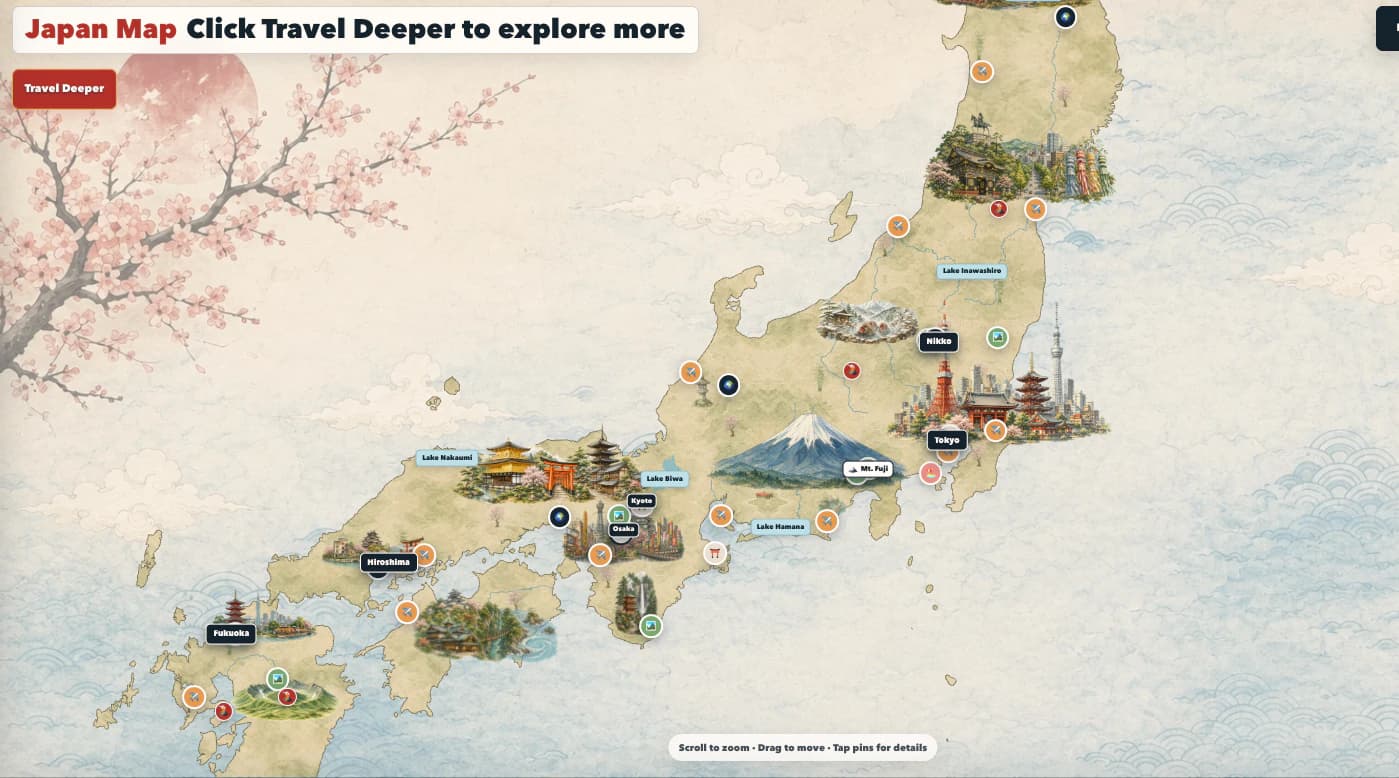
This guide is for travelers planning their own trip rather than booking a packaged tour. You do not need to solve every detail at once: decide the shape of the vacation first, reserve the parts that affect availability, and fill in individual days after the route makes sense. Use the interactive map of Japan to explore destinations and see how far apart they are before you put them on the same day.
How long should a Japan vacation be?
Count the days you will actually be in Japan, not only the dates printed on your flight itinerary. A long-haul arrival can leave little energy for sightseeing, and your departure day is mostly about getting to the airport on time. Keep those days in the plan, but do not treat them as full sightseeing days.
With about a week, choose one main region or two nearby bases and resist adding every famous stop. Around 10 days can support a Tokyo–Kyoto–Osaka route with a day trip, while two weeks gives you room to add another region or slow the pace. These are planning shapes, not rules; a traveler who loves hiking or small towns may build a very different vacation from someone focused on food, shopping, museums, or theme parks. See our 7-, 10-, and 14-day first-trip route overview or follow the detailed 10-day Japan itinerary.
Choose a route that matches your vacation
For a first trip, Tokyo, Kyoto, and Osaka are a useful starting point because they offer different experiences and connect along a familiar rail corridor. You can spend more time in one city, take a nearby day trip, or remove a stop if the hotel moves make the vacation feel too busy. Arriving in one city and flying home from another can reduce backtracking, but compare flight prices and schedules before deciding.
If you have already visited the major cities, build around a specific interest: mountain scenery, beaches, regional food, art, hot springs, historic towns, or winter sports. Add a destination because it fits your trip, not because it appears on someone else's checklist. A distant side trip can require an overnight stay even when a map makes it look close. Browse Japan destination guides by place, then use the map to check geography before you commit to the route.
Pick travel dates with weather, crowds, and closures in mind
Japan is a year-round destination, but the experience changes by season and region. Spring and autumn are popular for comfortable sightseeing and seasonal scenery. Summer brings festivals and outdoor events but can be hot and humid. Winter suits snow trips, hot springs, and city visits in cooler weather; conditions vary sharply between regions.
Check whether your dates overlap with Golden Week in late April and early May, Obon around mid-August, or the year-end and New Year holiday period. Domestic travel can be busier then, and some businesses may close or reduce hours. If your dates are fixed, reserve lodging and important transport earlier and verify opening details close to travel. If they are flexible, shifting your trip away from a major holiday can make hotel and transport planning easier.
Build a Japan vacation budget you can actually use
There is no single price for a Japan vacation. Your total depends on airfare, season, number of travelers, room type, location, intercity moves, meals, activities, shopping, and how early you book. Rather than relying on a generic daily figure, estimate the large costs for your own dates and keep a separate cushion for changes and unexpected needs.
Start a budget with these categories, then add real quotes as you research:
- Flights and airport transfers, including baggage or seat fees that apply to your booking.
- Accommodation by night, with taxes, cancellation terms, and the number of rooms included.
- Long-distance and local transport, including airport routes and any day trips.
- Food, attraction tickets, reservations, travel insurance, mobile data, and luggage services.
- Shopping and a contingency amount that stays available instead of being assigned to another activity.
Compare the full route before buying a nationwide rail pass. If your plan includes several long-distance train rides, enter them in the JR Pass calculator and compare the estimate with individual tickets and relevant regional options.
Book the important pieces in the right order
A practical sequence is to settle the international flights and city order, book cancellable lodging where possible, and then reserve experiences that sell out or have timed entry. Before paying for a nonrefundable activity, check its location against that day's other stops and confirm the date, entry time, and cancellation terms.
Do not book hotels for a route you have not checked. A low nightly rate can cost more in time or transport if it adds a long commute or makes an airport departure difficult. Compare neighborhoods and exact station access, not just city names. Our guide to finding Japan hotels, rental homes, and ryokans explains the details worth checking before you reserve.
Plan transportation and sightseeing as one problem
Japan's rail, subway, and bus networks can make independent travel manageable, but the fastest line between two cities is only part of a travel day. Add the trip to the station, finding the platform, the train journey, getting from the next station to your hotel, and handling luggage. Avoid placing a timed attraction immediately after a long transfer.
Within large cities, group stops by neighborhood and give each day one or two priorities. Check walking distances and station exits, add meal and rest breaks, and keep a weather-friendly alternative. Your plan should help you make decisions, not make the entire day fail when one train or reservation runs late. Use our Japan bus fare guide for a closer look at local bus boarding and payment.
Prepare the practical details before departure
Save hotel addresses, flight details, important reservations, and the first airport transfer somewhere you can access offline. Confirm entry-document requirements for your passport and trip, medication rules, travel insurance, phone compatibility, and the current terms of anything you reserve. Keep a copy of essential information separate from your phone as well.
Choose mobile data based on who needs to connect and how: an eSIM can work well for one compatible unlocked phone, a physical SIM suits travelers who prefer a card, and pocket Wi-Fi can be useful for sharing across devices. Compare the plan limits, coverage, setup, pickup or delivery, and return requirements before choosing. NINJA WiFi offers pocket Wi-Fi, SIM cards, and eSIMs; Japan Wireless is another pocket Wi-Fi option to compare. We may earn a commission if you use our NINJA WiFi link, at no additional cost to you. See our affiliate disclosure.
Turn your research into a vacation plan
Once you have a route, move your ideas out of scattered tabs and notes. Save places by city, see which ones sit near each other, and place only the strongest choices into each day. That makes it easier to spot a route that doubles back, a transfer day that is too full, or a hotel location that does not fit the plan.
Explore the interactive map, then open the Japan itinerary planner to organize your dates, locations, and notes. If you want a complete example before building your own, start with our 10-day first-time Japan itinerary.
Japan vacation questions
Can I plan a Japan vacation on my own?
Yes. Many travelers plan independently by choosing a manageable route, booking flights and lodging, checking transport, and reserving any time-sensitive activities. You do not need to arrange every hour in advance; plan the important connections and leave flexible time around them.
What is a good first Japan vacation itinerary?
Tokyo, Kyoto, and Osaka are a common starting route because the cities offer distinct experiences and are connected by frequent intercity services. The right number of nights depends on your total time, arrival and departure airports, and whether you want day trips. For a detailed sample, see our 10-day itinerary for first-time visitors.
How much does a Japan vacation cost?
The total varies with season, flights, hotel choices, route, meals, activities, and shopping. Price your own dates and route by category rather than relying on one average that may not match your trip.
Do I need a travel package for a Japan vacation?
No. A package is one way to travel, but you can also book the trip yourself and choose each hotel, activity, and transport option. Independent planning gives you control over pace and route; it also means you are responsible for checking each reservation and connection.
When should I book a Japan vacation?
Start when your dates and route are firm, especially if traveling during a popular seasonal or domestic holiday period. Booking windows differ by airline, accommodation, and attraction, so check each provider's current availability and terms.
Start building your Japan vacation
Start with your available days and the places you are most excited to experience. Choose a route that leaves enough time for each stop, compare the real costs, and then shape the days around neighborhoods rather than a checklist. A thoughtfully planned vacation can still leave room for spontaneous meals, unexpected discoveries, and a slower morning.
Explore Japan on the map, browse destination guides, or start your itinerary.
Travel details can change. Confirm current schedules, opening hours, reservation rules, prices, and entry requirements with the relevant official provider before booking or traveling.