
Best-Value Japan Itinerary Packages for a $3,000 Budget
A $3,000 budget can make a breathtaking first trip to Japan very doable. Compare guided tours, digital itinerary guides, and flexible self-planning, then see how a 10-day budget can add up.
Affiliate disclosure: Some links in this article may earn Japan Trip Planners a commission at no extra cost to you. Recommendations are included when they are genuinely useful for planning, and you should still compare current prices, terms, and official provider information before booking.
Is $3,000 enough for a first-time Japan vacation?
Yes. A $3,000 per-person budget can be extremely doable for a breathtaking first vacation in Japan, particularly for a well-planned trip of around 10 days. The key is deciding what the $3,000 includes. If it includes your international flight, how much remains for hotels, meals, transport, and activities depends heavily on your departure city, dates, and airfare. If flights are already paid for, the same budget gives you considerably more room on the ground.
The example in this guide is a planning model, not a promise that every traveler can buy a package for that price. It assumes one traveler, 10 calendar days and 9 nights, a modest room shared with another traveler, a Tokyo-to-Kansai route, and an illustrative $900 round-trip flight. Traveling alone, visiting during a peak holiday, choosing luxury hotels, or adding several long-distance side trips can raise the total. A lower flight fare or a shorter route can leave more money for a special stay, food experience, or extra day.
A modest budget does not have to mean a small experience. Japan's memorable moments can be a quiet temple garden, a neighborhood food stop, a train ride through changing scenery, or an evening walk beneath city lights. Spend deliberately on the experiences you care about, and let the rest of the plan support them.
Which Japan itinerary package offers the best value?
The best-value option depends on what you mean by a package. A guided vacation package may bundle hotels, transport, some meals, and a tour leader. A digital itinerary product gives you planning ideas or a prefilled schedule, while you make and pay for bookings yourself. Those are different products, so compare what is actually included before comparing headline prices.
- Guided tour: best when you value a leader and prearranged logistics; check exclusions, free time, room surcharges, and the final total.
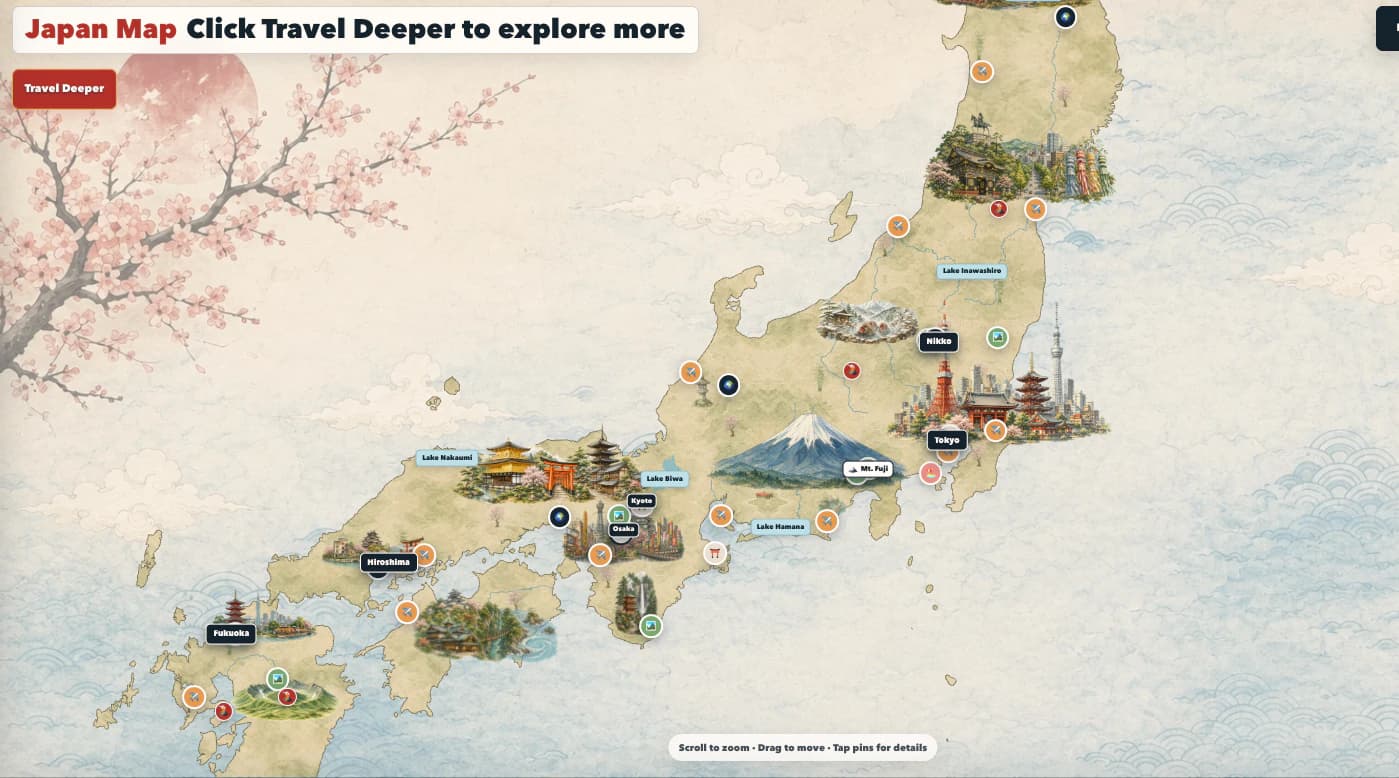
- Self-planned route: often stretches a fixed budget furthest because you choose the flight, hotel level, and paid experiences. Use the free itinerary builder and interactive map.
- Digital guide or prebuilt route: useful when you want ideas or a schedule to adapt, but it does not book or include your travel. Compare the destination guide bundles and Premium route library against the planning help you need.
For a first-time visitor with a $3,000 ceiling, the best value is often a flexible Tokyo-and-Kansai route that you control. This keeps you from paying for guided days, hotel categories, or transfers you would not have chosen. Japan Trip Planners is a trip-planning resource, not a tour operator selling a bundled flight-and-hotel vacation. Check each product page for its current price and inclusions before you decide.
A realistic 10-day Japan budget for $3,000
Here is one way to allocate $3,000 per person for a 10-day first trip that includes an illustrative round-trip flight. The figures are planning allowances, not current quotes or typical prices. Replace the flight and hotel estimates with actual prices for your dates before you book; if one category comes in higher, adjust another rather than assuming a coupon will cover the gap.
A first Japan route that protects your budget and time
For 10 calendar days including arrival and departure, a practical first outline is four nights in Tokyo, three in Kyoto, and two in Osaka. Fly into Tokyo and, when the airfare works, depart from Kansai International Airport so you do not spend time and money returning across the country. The hotel move from Tokyo to Kyoto is a real travel day; keep the first evening in Kansai light rather than scheduling several timed attractions.
Group Tokyo activities by neighborhood and choose one optional day trip only if it matters more than another city day. In Kyoto, pick a few areas you are excited about and leave space for walking, meals, and rest. In Osaka, plan a food-focused evening or a neighborhood day. Nara can be a day trip from Kyoto or Osaka, but it is an option, not a required fourth hotel stop.
This is a sample shape, not a rule. If your flight arrives late, shorten Tokyo sightseeing rather than rushing from the airport. If your return flight leaves Tokyo, keep a final Tokyo night in the budget instead of relying on a long same-day train connection. Use our detailed 10-day first-time Japan itinerary for another practical daily outline.
How to compare Japan vacation packages before you buy
A low advertised price can leave important expenses out. Before paying for a tour or a ready-made plan, check whether it includes international airfare, checked baggage, airport transfers, hotel taxes, breakfasts, intercity rail, local transport, attraction admissions, and a guide. Confirm how many nights are included, what room occupancy the quote assumes, and whether there is a single-room surcharge.
Read the cancellation rules and the payment schedule. Check whether the activities are guaranteed or optional, how much free time you get, and whether the itinerary changes hotels often. A guided group can be good value if you want a leader, fixed logistics, and included experiences. It may be less suitable if you want to choose your own hotels, restaurants, pace, or day trips.
For digital itinerary packages, confirm that you are buying planning guidance or a sample schedule rather than airfare, lodging, tickets, or personal booking support. Compare that product against the time it saves you and the flexibility it keeps. Do not pay for an itinerary just because it has more stops; a route that fits your flight times and energy can be worth more than a packed calendar.
Save money with Japan Trip Planners tools and resources
You can save money by making the big choices before they turn into expensive bookings. Use the free itinerary builder to see how many hotel nights your route needs, and the interactive map to group nearby places instead of crossing a city several times in one day. Compare actual train journeys in the JR Pass calculator before buying a nationwide pass; the pass is not automatically the cheapest choice for every route.
Visit our Booking Resources page for current partner links, travel services, and available discount information. Offers, eligibility, and prices can change, so check the final booking total and terms before you rely on any promotion. We may earn a commission when you book through some links, at no additional cost to you. For a broader planning checklist, download The Best Japan Money Savings Guide, our free guide to smarter booking, transit decisions, passes, and common overspending mistakes.
Discounts can help, but the strongest savings often come from choosing a route that avoids unnecessary transfers, selecting accommodation that suits your actual needs, and not paying for activities you do not want. Keep a reserve for the trip rather than spending the entire budget on advance bookings.
Japan itinerary packages on a $3,000 budget: FAQs
Does $3,000 include airfare? It can in the sample budget above, but the flight amount is only an illustration. Enter your actual fare first; if airfare is higher, shorten the trip, adjust lodging, or remove optional paid activities rather than assuming all travelers can meet the same total.
Is $3,000 enough for two people? If $3,000 is the combined budget for two travelers, it is much tighter, especially if it must cover two international flights. If each traveler has $3,000, the sample can be adapted, but room sharing, flight costs, and dates still matter.
Are Japan Trip Planners itinerary guides tour packages? No. Our builder, map, guides, and prebuilt schedules help you plan. They do not bundle or book your flight, hotel, meals, or attractions. Review the product description before purchase so you know exactly what is included.
Can I have a breathtaking trip without expensive tours? Absolutely. Choose a few paid experiences that matter to you, then build the rest around neighborhoods, scenic walks, temples, public spaces, and local meals that fit your interests. The trip feels personal when it matches your priorities, not when every day is filled with a tour.
Build a Japan trip that fits your $3,000 budget
A $3,000 budget can absolutely create a breathtaking first Japan vacation when the route, dates, and bookings fit the number. Start with your real flight price, decide how many nights you can afford, and choose the experiences you care about most. Then use the map, free itinerary builder, Booking Resources, and free Money Savings Guide to shape the rest. Your best itinerary is not the biggest package; it is the one that lets you enjoy Japan without losing sight of what you can comfortably spend.
Travel details can change. Confirm current schedules, opening hours, reservation rules, prices, and entry requirements with the relevant official provider before booking or traveling.