
How to Use Japan Coin Lockers for Luggage
A station locker can turn a hotel-change day into an easy sightseeing day. Here is how to find one, choose the right size, pay, and get your bag back without a last-minute station search.
Affiliate disclosure: Some links in this article may earn Japan Trip Planners a commission at no extra cost to you. Recommendations are included when they are genuinely useful for planning, and you should still compare current prices, terms, and official provider information before booking.
When a coin locker is useful
Coin lockers are short-term self-service storage for a backpack, shopping bags, or a suitcase that fits the compartment. They are especially useful between hotel checkout and check-in, during a long transfer, or when you want to explore a neighborhood without rolling luggage through crowded streets.
The important word is short-term. A locker is not a guaranteed long-stay storage service, and an empty large compartment may be hard to find at a busy station. Before paying, make sure you can return to that exact location during its access hours.
Where to find coin lockers in Japan
Train stations are the first place to look. Larger JR, private-railway, and subway stations often have several locker banks around concourses, near exits or ticket gates, and sometimes in connected station buildings. Follow the suitcase-and-key locker symbol on station signs or ask station staff for coin lockers (koin rokkaa). Some banks are inside the paid area and others are outside it; choose a side you can reach again without an unwanted fare or detour.
Airports are another common place. For example, Haneda Airport lists locker locations by terminal and says its lockers are outside the gates. Selected tourist facilities and sightseeing hubs may also have lockers, but do not assume every small station, attraction, or bus stop has one. Check that specific place's facility map before building a day around storage there.
At a large station, save the station name, floor, exit, nearby landmark, and locker number. Two locker banks can look almost identical, and simply remembering 'the lockers at Kyoto Station' is not enough when you return in a hurry.
Choose the size and read the rules first
Lockers come in different heights and depths. A small compartment may hold a daypack but not a cabin suitcase; larger ones can be limited and fill quickly. Check the dimensions on the machine or facility page and allow room for wheels and handles. Do not force a door shut on a bag that barely fits.
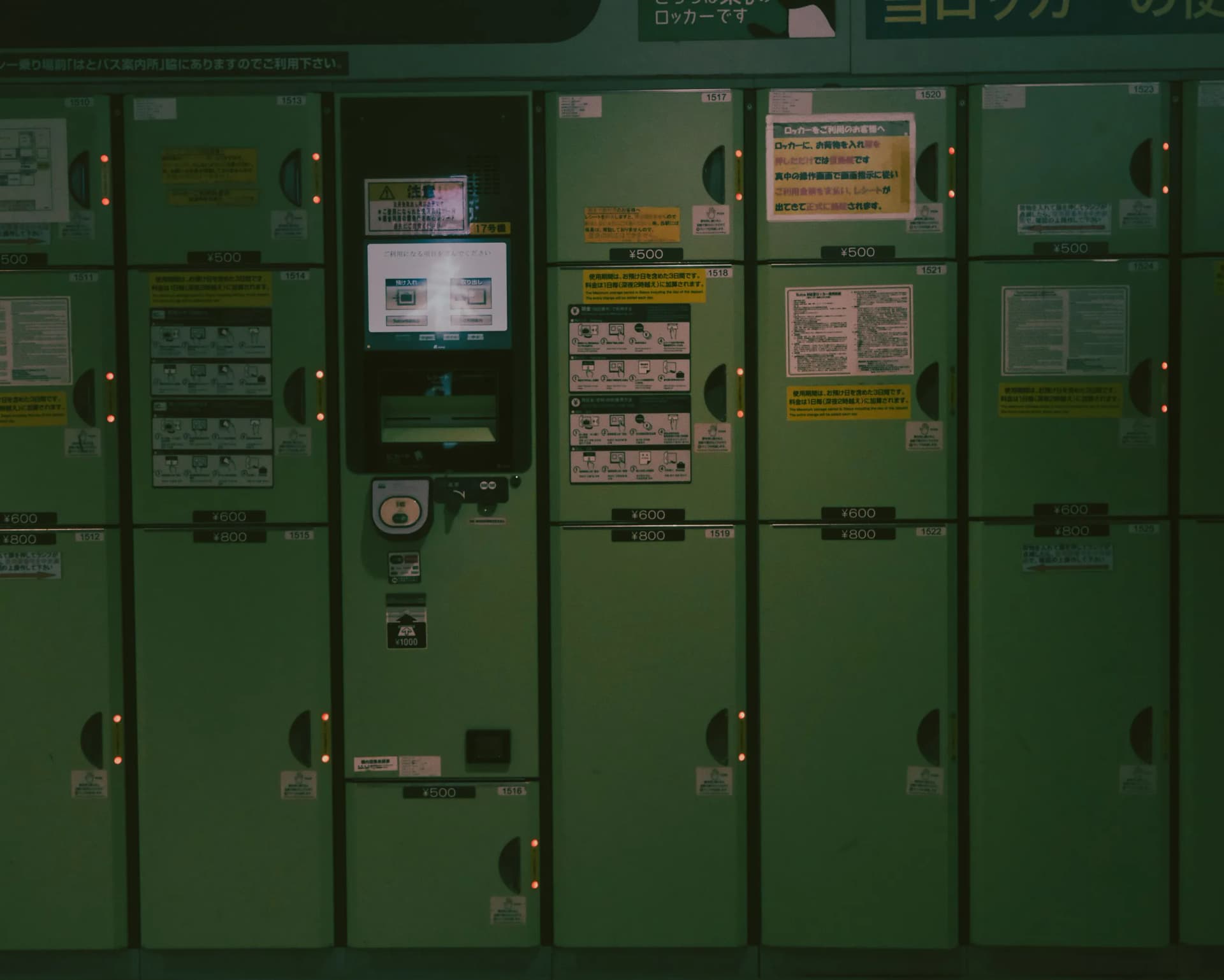
Read the fee shown on the actual locker. Price depends on operator, station, size, and duration; the amounts visible in a photograph are not a current nationwide price list. Also check when another charge begins. Some operators count 24-hour periods, while other lockers use a daily cutoff time. The maximum storage period and access hours vary too.
Check the accepted payment marks before loading your bag. 'Coin locker' does not always mean coins only: some machines accept transit IC cards, credit cards, or other electronic payments, while older lockers may still require coins.
How to use a cash-and-key locker
Find an available compartment and confirm your bag fits. Put the bag inside, close the door, and follow the instructions printed on that locker. On a traditional key-operated model, you insert the displayed amount, turn the key to lock, and take the key with you. Give the door a gentle check before walking away.
Keep the key somewhere secure but separate from the bag you stored. Take a photo of the locker bank's location and number for your own reference. When you return, follow the posted retrieval instructions, pay any additional amount due, unlock the door, and take all your belongings. If the key is lost or the lock fails, use the operator contact number on the locker rather than trying to force it open.
How to use a screen or IC-card locker
At an electronic locker bank, put the bag in an available compartment and close the door. Follow the screen's 'store' or 'deposit' prompts, confirm the locker number and fee, and choose a supported payment method. If the machine uses a transit IC card such as Suica or ICOCA, tap the card it asks for and wait for confirmation that the door has locked.
Take the receipt even when your IC card acts as the key. JR East's Welcome Suica instructions say the receipt carries the locker location and contact information. To retrieve a bag on that system, choose 'taking out' on the screen and tap the same card. Other machines may instead issue a paper receipt, PIN, or QR code for retrieval, so keep whatever your particular machine gives you. Do not leave your only retrieval method inside the locker.
A phone-based transit card and a physical card are not interchangeable keys just because they share the same card brand. Use the same card or device you used to store the bag, and check the machine's instructions if you change phones or cards during the day.
Pick up your luggage without a last-minute scramble
Plan the return route before leaving the station. Note the train or subway line, which side of the ticket gates you are on, the exit number, floor, and a nearby shop or sign. A quick private photo of the bank and its contact label can save more time than relying on a map pin in a sprawling station.
Return with enough time to find the bank, pay any extra fee, and reach your train. Open the locker using its key, card, or code, remove everything, and check the compartment before leaving. If the locker is in a station or building that closes, its retrieval hours matter more than the fact that your bag is physically still inside.
Keep essential and restricted items with you
Carry your passport, medication, wallet, travel documents, electronics you urgently need, and other irreplaceable valuables with you. Locker operators can restrict dangerous goods, perishables, and other items; read the posted terms rather than assuming a locked compartment is suitable for everything.
Avoid storing a bag you may need to reopen repeatedly. Accessing it may end that rental or require a new payment, depending on the machine. Pack a small day bag first, then store the larger luggage once.
What if the lockers are full or your bag will not fit?
Try another locker bank in the station, preferably near a different exit. Some major stations provide locker-availability screens or online searches; JR West lists this for several large stations. Do not count on real-time availability at every station, and remember that large compartments are usually the first to disappear on busy travel days.
A staffed luggage counter may accept a suitcase too large for a locker. JR West also lists station storage and delivery options. Your hotel may hold luggage before check-in or after checkout, subject to its own policy. For a multi-city journey, forwarding the main suitcase can be more comfortable than searching for a locker at every stop. Confirm counter hours, bag limits, prices, and delivery timing before relying on any of these alternatives.
Official locker resources
Locker rules differ by operator and location. Check the posted instructions first, then use these official resources when planning:
Travel details can change. Confirm current schedules, opening hours, reservation rules, prices, and entry requirements with the relevant official provider before booking or traveling.