
Things to Do in Tokyo: Sights, Food, and Days That Fit Together
Choose the Tokyo experiences that suit your interests, understand which tickets need planning, and connect the sights into days you will actually enjoy.
Affiliate disclosure: Some links in this article may earn Japan Trip Planners a commission at no extra cost to you. Recommendations are included when they are genuinely useful for planning, and you should still compare current prices, terms, and official provider information before booking.
What are the best things to do in Tokyo?
For a first Tokyo trip, start with Senso-ji and Asakusa, Shibuya Crossing, one observation deck, Meiji Jingu, and a food-focused neighborhood such as Tsukiji or Ueno. Add teamLab, a museum, anime shopping or a theme park according to what genuinely excites you. You do not need to do every famous attraction to have a memorable visit.
Tokyo is especially rewarding when you let different kinds of places share a day: a quiet shrine before busy shopping streets, a garden between museums, or a relaxed dinner after a timed exhibition. The challenge is not finding enough things to do. It is choosing a few that work together without spending the holiday changing trains.
This guide focuses on what to do and how to group it. For choosing a hotel base, use our separate Tokyo neighborhood guide. Suggested visit lengths below are planning allowances, not operator promises; queues, meals, mobility needs and shopping can change them considerably.
A quick note about booking links
Some links in this article are affiliate links. Japan Trip Planners may earn a commission if you book through them, at no extra cost to you. A link does not guarantee the lowest price, a discount or availability. Compare the selected package, final price and cancellation conditions before paying.
Our Klook code JAPANPLAN may offer savings on eligible bookings; exclusions, minimum spends and other conditions can apply. Check whether the code is accepted for your booking rather than treating it as a universal discount. Free sights do not require a paid tour simply because bookable experiences appear alongside them.
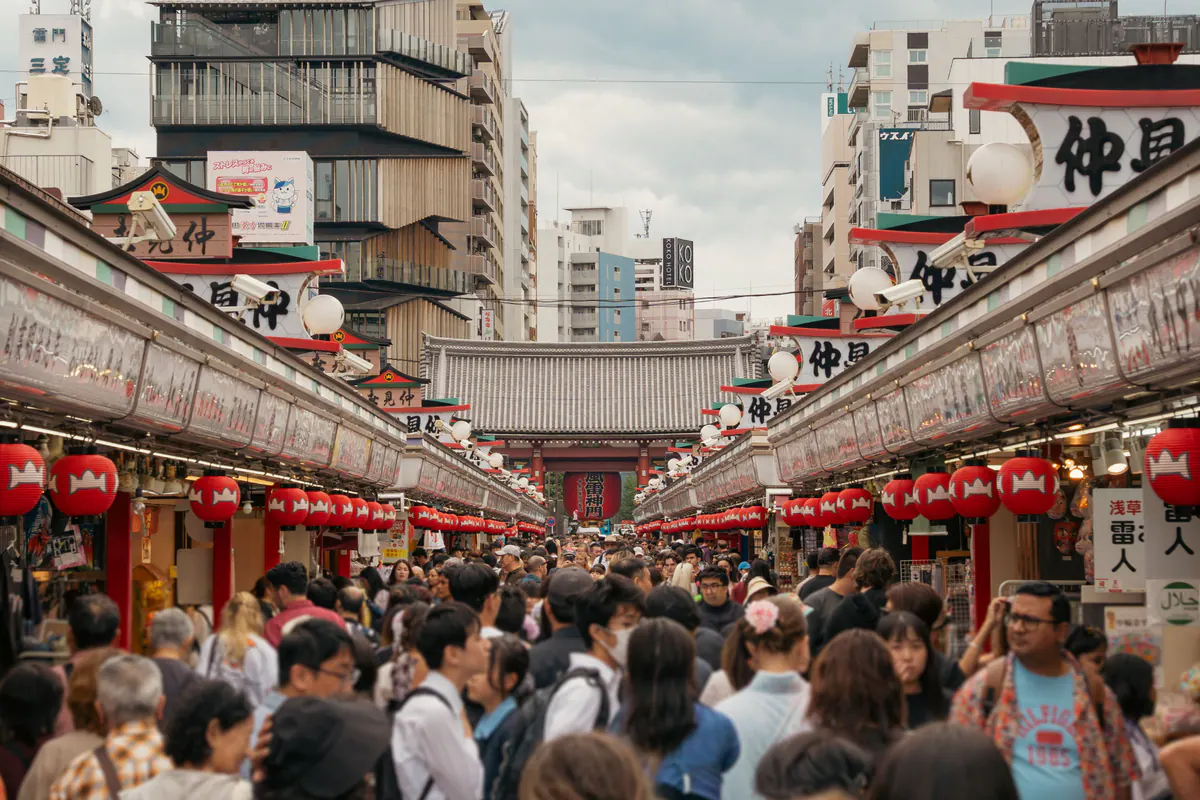
1. Explore Senso-ji and the streets of Asakusa
Asakusa is a strong introduction to Tokyo's traditional side. Walk through Kaminarimon, continue along Nakamise toward Senso-ji, and then step away from the main approach into the surrounding streets. The temple, shopfronts and smaller lanes offer more variety than a quick photograph at the lantern suggests.
Allow roughly two to three hours for the temple area, browsing and a food stop. An early visit can give you more breathing room, but the shops and main hall do not all follow the same hours. An evening walk has a different atmosphere and is not a substitute for visiting businesses that have already closed.
The main temple grounds are free to explore. Keep the worship area clear, follow photography signs, and eat snacks where the seller permits rather than blocking the approach. Pair Asakusa with either nearby Kappabashi or the Sumida River and Skytree side of the city; adding every east-Tokyo neighborhood will turn an enjoyable outing into a checklist.
2. Browse ceramics and kitchenware in Kappabashi
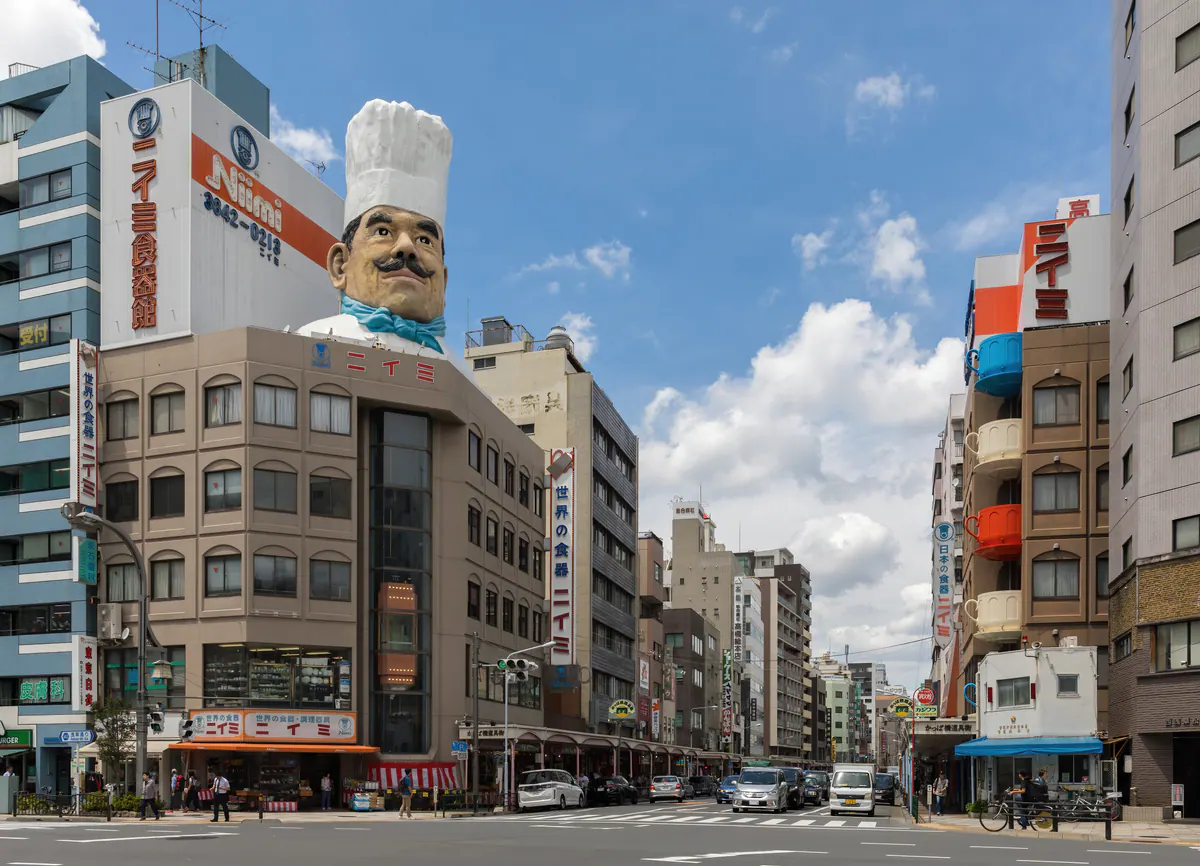
Kappabashi Kitchen Town is a satisfying detour if you would rather bring home a bowl you will use than another generic souvenir. Look for ceramics, cooking tools, chopsticks and the wonderfully detailed food replicas associated with restaurant displays. It connects naturally with an Asakusa outing, with the exact walking route depending on your starting point.
Give it an hour or two if kitchenware interests you. This is a shopping district, not a single attraction with one opening schedule; check priority shops before making a special journey. Comparing several stores can be more enjoyable than buying at the first window.
Think about the journey home before buying fragile pottery or bulky equipment. Ask about packing, check an appliance's electrical compatibility, and put knives in checked luggage subject to your airline and destination rules. A beautiful purchase is less appealing when it becomes an airport problem.
3. See eastern Tokyo from TOKYO SKYTREE
Choose Skytree if a high, expansive city view is a priority and you are already exploring eastern Tokyo. Pair it with Asakusa and a riverside walk rather than treating it as a quick extra between Shibuya and Shinjuku. Allow roughly one and a half to two hours around your entry slot, plus more time if you want the surrounding shops or another attraction.
Compare TOKYO SKYTREE ticket options: Tembo Deck admission and a package that also includes Tembo Galleria cover different viewing areas. Do not pay for a combination without understanding what you are adding. Clear conditions help a distant view, but Mount Fuji visibility is never guaranteed.
You can also enjoy the tower from outside without purchasing observation-deck entry. If the skyline is not a major interest, keep the riverside walk and spend the ticket budget on an experience you care about more.
4. Choose a Ueno museum, then explore Ameyoko
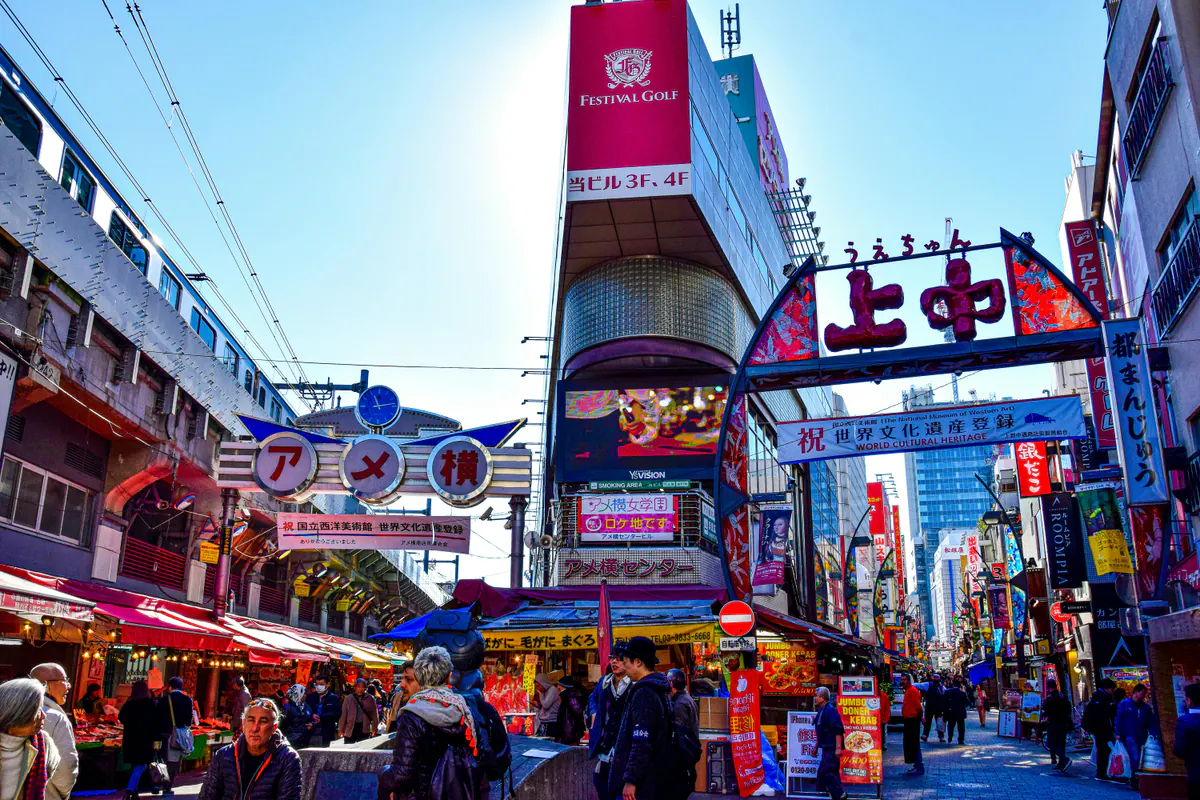
Ueno works well when you want culture without a day built entirely around timed attractions. Choose the Tokyo National Museum for Japanese art and historical objects, or the National Museum of Nature and Science for a different focus, then leave time for the park. These are separate museums, not different entrances to the same collection.
Set aside two to three hours for one museum rather than rushing several. Check the calendar for the actual date: museum closures and public-holiday exceptions can change a Monday plan, and a special exhibition may require a different ticket from the general collection.
Afterward, explore the shopping lanes of Ameyoko for a lively contrast. Compare menus before sitting down and leave some appetite for a spontaneous find. Ueno can also connect with Yanaka on a slower day; doing a major museum, Yanaka, Asakusa and Skytree together would leave very little time to enjoy any of them.
5. Experience Shibuya Crossing and choose your viewpoint
Shibuya is not only a crossing to photograph. Use the famous intersection as the beginning of a neighborhood visit, then browse shops, stop for a meal and explore streets away from the station. Crossing at street level is free, so you do not need an observation ticket to experience the district.
Compare SHIBUYA SKY tickets if an elevated view is part of the appeal. Allow roughly one and a half to two hours around admission and check the live rules for your selected date. Outdoor access can be affected by weather; a booking does not promise an uninterrupted rooftop sunset.
Avoid paying for three observation decks simply because they appear on every Tokyo list. Choose Shibuya for a west-side city day, Skytree for an east-side day, or Tokyo Tower for the Minato area. Two can be worthwhile if photography is a main interest, but they should be deliberate choices.
6. Walk through Meiji Jingu, then explore Harajuku
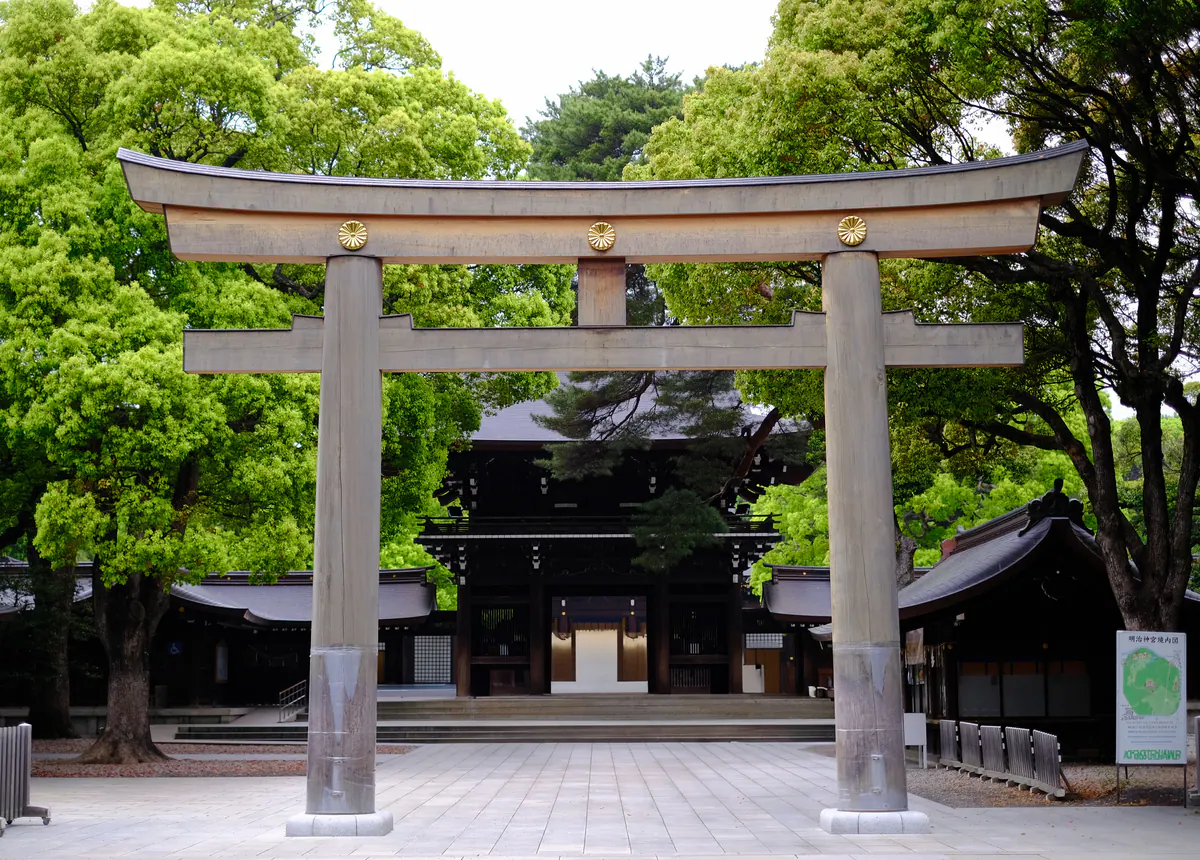
Meiji Jingu gives a west-Tokyo day a calmer beginning: a forest approach, shrine architecture and a change of pace before Harajuku's busy shopping streets. Shrine entry is free, while associated facilities such as the Inner Garden or museum can have separate admission arrangements. Check the seasonal opening hours rather than assuming the grounds remain open late.
Allow around an hour for a straightforward shrine visit, longer if you add paid facilities or a slower walk. Follow the signs around sacred areas, observe people worshipping without intruding, and never assume every ceremony is a photo opportunity.
Afterward, choose the Harajuku experience that appeals most: Takeshita Street for concentrated crowds and youth-fashion energy, or a slower walk toward Omotesando for shops and architecture. You can continue to Shibuya, but the browsing and walking are part of the day's activity, not an empty gap between attractions.
7. Take a real break in Shinjuku Gyoen
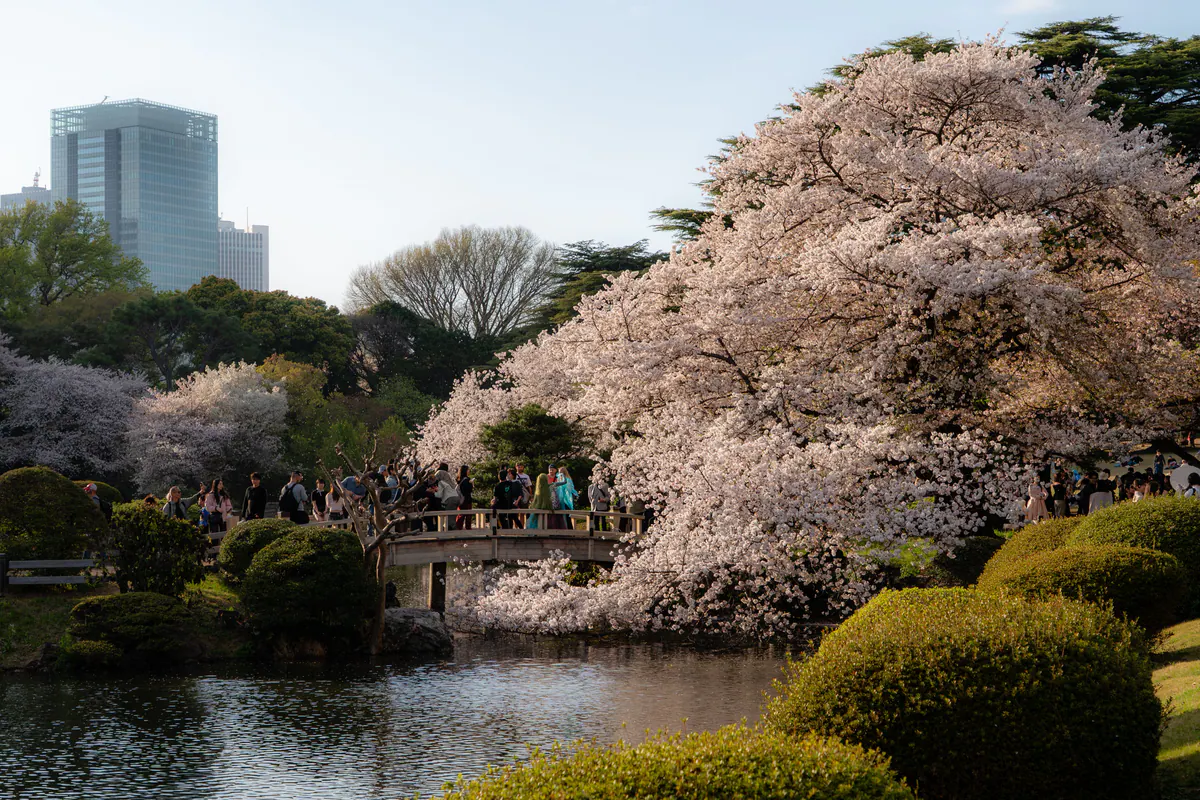
Shinjuku Gyoen is a good choice when your itinerary needs space, greenery and less noise. Its different garden landscapes make it more than a patch of lawn between shopping stops. Allow roughly one and a half to two hours, and be willing to sit down rather than treating every path as something to complete.
This is a paid garden with its own opening calendar and rules, not a public park that is always accessible. Check seasonal hours, closure dates and any peak blossom-season reservation arrangements for your travel year. Alcohol is prohibited; do not plan a drinking picnic because you have seen photographs of cherry-blossom parties elsewhere.
Spring blossoms and autumn foliage can make the garden especially appealing, but their timing varies. The photograph below shows a blossom-season scene, not what every visit looks like. In hot weather, plan shade and water; during heavy rain, a museum may be a more comfortable use of the afternoon.
8. Enjoy Shinjuku after dark without overplanning it
Shinjuku is an easy answer to what to do in Tokyo at night: dinner, bright streets and a different mood from the city's shrines and gardens. Omoide Yokocho is worth considering for its compact dining lanes; Golden Gai is a separate area known for small bars. They are not interchangeable names for one food market.
Read posted menus and check cover charges, seating charges and minimum orders before committing. Tiny venues are not always suitable for a large group, children or travelers avoiding smoke. A short look followed by dinner somewhere more comfortable is a perfectly good evening.
Do not follow street touts into unfamiliar establishments, and ask before photographing staff or customers. Check your last practical train home before the evening begins; Tokyo's trains are not a round-the-clock service. If nightlife is not your thing, an early dinner and a walk are enough to enjoy the area.
9. Combine Tokyo Tower with Zojoji and the Minato area
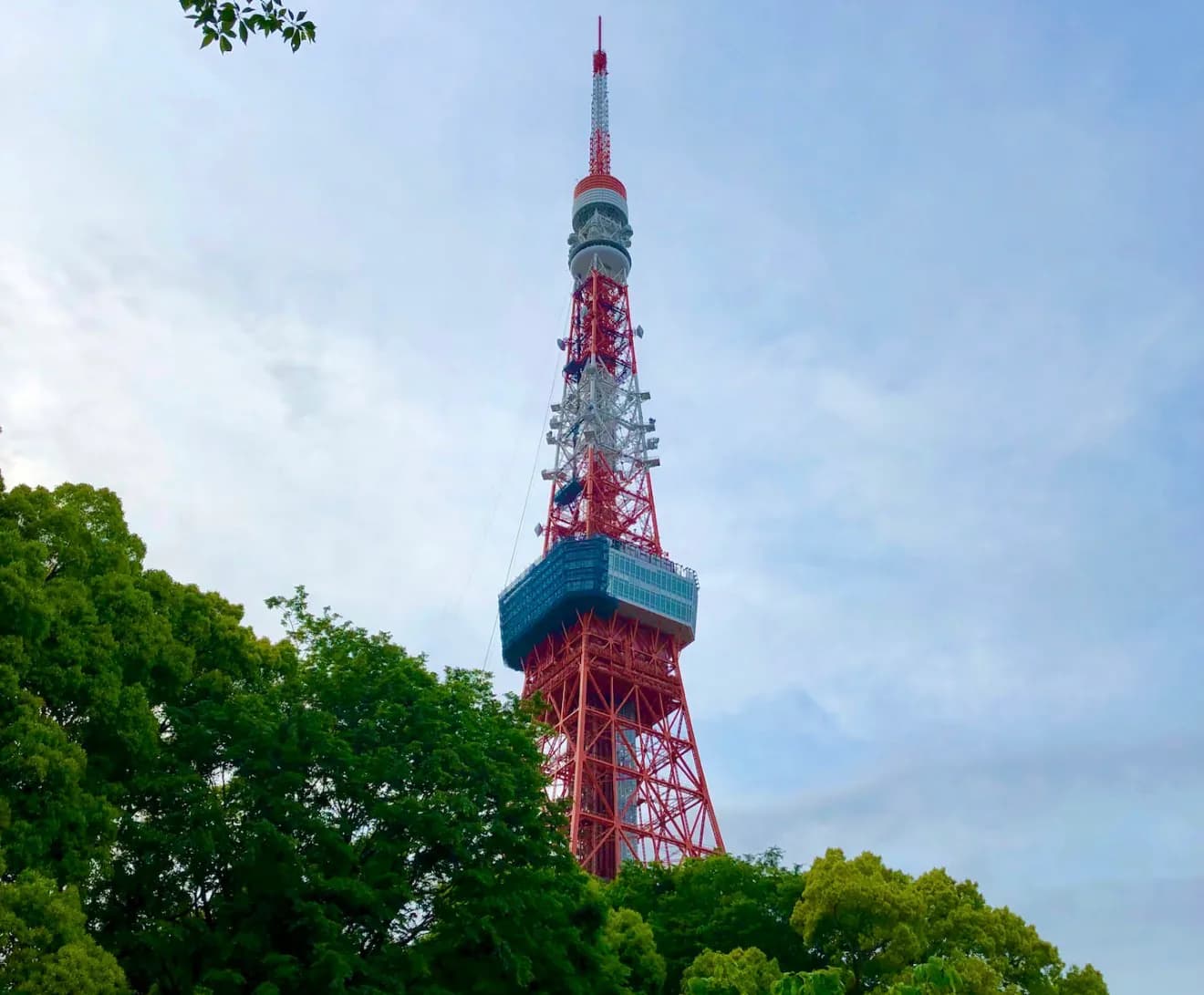
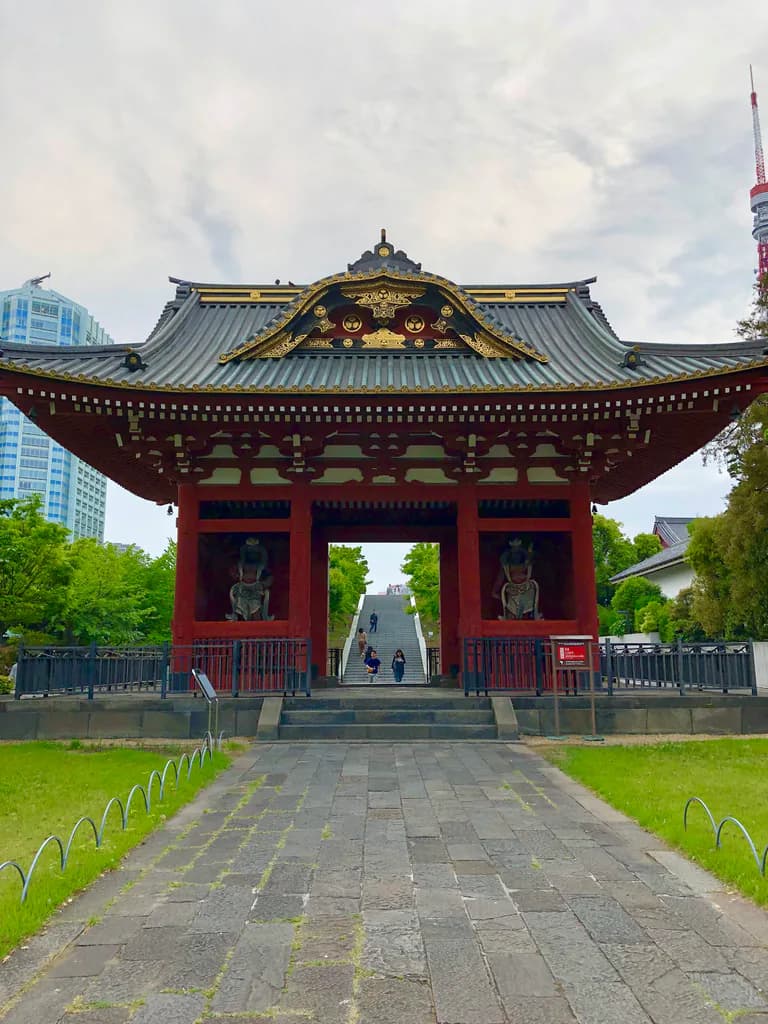
Tokyo Tower is especially appealing if you want the recognizable red-and-white landmark as part of the experience, not just the highest possible viewpoint. Explore around Zojoji and Shiba Park for contrasting views of temple buildings, greenery and the tower, while respecting any temple access or photography restrictions.
For the observatory, compare Tokyo Tower tickets, distinguishing the Main Deck from a Top Deck Tour package and reading what your ticket includes. Allow about one to two hours for the tower visit itself, then build in additional time for the surrounding area. You can appreciate and photograph the exterior without buying observatory admission.
This is a sensible pairing with teamLab Borderless at Azabudai Hills, with a walk or local transport between them depending on your route and mobility needs. It is not the same pairing as teamLab Planets in Toyosu, which sits in a different part of Tokyo.
10. Choose the teamLab experience that fits your day
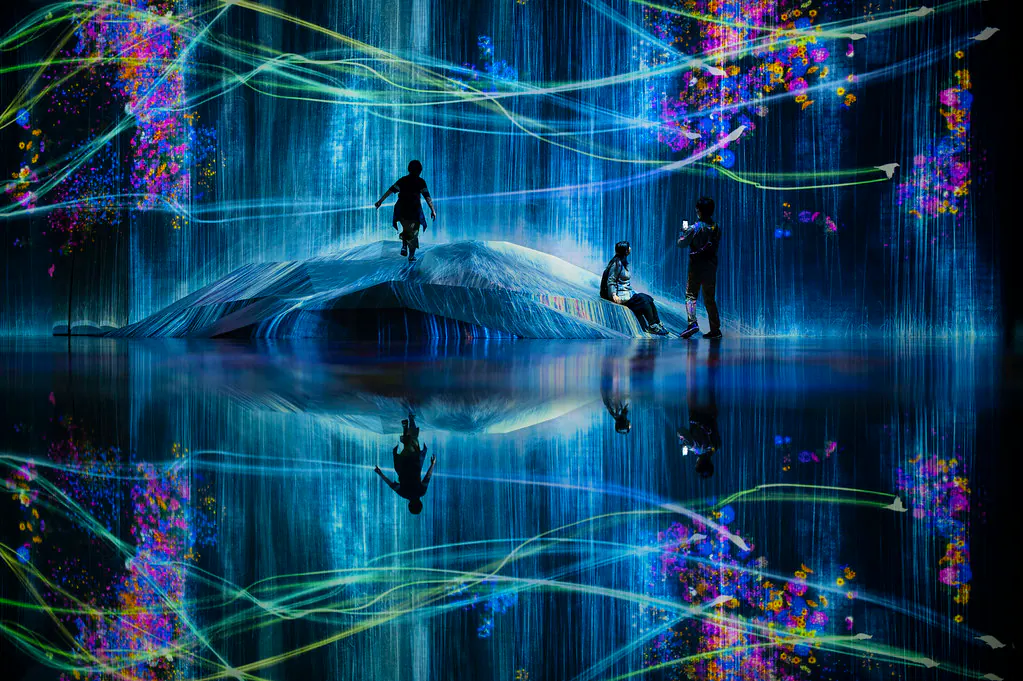
teamLab Borderless and teamLab Planets are different venues with different locations and experiences. Borderless is at Azabudai Hills, where digital artworks move between spaces and invite exploration. Planets is in Toyosu and includes barefoot water-based experiences. Buying one does not give you entry to the other.
Choose teamLab Borderless tickets for a Minato-area day around Tokyo Tower or Roppongi. Choose teamLab Planets tickets for a Toyosu-focused outing, perhaps continuing toward the bay if you still have energy. Reserve at least a couple of hours for either experience as a planning allowance, plus travel and an arrival buffer; do not book the next activity tightly against your entry time.
Check the selected ticket's entry conditions, cancellation rules and accessibility information before paying. Dark spaces, mirrors, lighting effects and physical elements affect people differently. Planets visitors should read the official water-area visitor guidance; check directly with the venue if mobility or sensory needs could affect participation.
11. Make food part of the day in Tsukiji and Ginza
Tsukiji Outer Market suits a morning or early lunch built around food browsing, a sit-down meal and specialty shops. It is not the wholesale tuna auction, which moved to Toyosu. You do not need to turn up before dawn just to explore the outer market's shops; check the businesses you care about and give working buyers room.
Arrive hungry but compare a few menus before spending your entire food budget at the first stall. Decide whether you want a substantial seafood bowl, several smaller tastes or a restaurant lunch. Eat in the permitted area rather than while walking, carry cash as a backup, and do not assume every shop is open on the same days.
Ginza makes a useful next stop for department-store food halls, shopping or an indoor break. You can also make the day more hands-on by browsing Tokyo sushi-making classes. This link opens a search, not one fixed class. Check the actual meeting address, class length, menu and dietary arrangements: a product described as a Tokyo class is not necessarily near Tsukiji.
12. Follow your interests in Akihabara or Ikebukuro
For anime, games, manga and character goods, choose a district around your interests rather than visiting every shopping area. Akihabara offers a concentration of hobby shops, electronics and gaming-related browsing. Ikebukuro is another strong choice for anime merchandise, with Animate and the Sunshine City area among the places to consider.
Give yourself a couple of hours for browsing, or longer if collecting is a major purpose of the trip. A specialist shop can absorb more time than an observation deck. Check release dates, stock and opening hours for a must-buy item; do not assume a social-media video reflects what is on sale during your visit.
Set a shopping limit before entering arcades and capsule-toy areas, and compare used-item condition carefully. Photography is not automatically allowed inside stores. If your group has mixed interests, agree on a meeting time and nearby alternative rather than dragging everyone through hours of merchandise hunting.
13. Slow down around Yanaka and Nezu
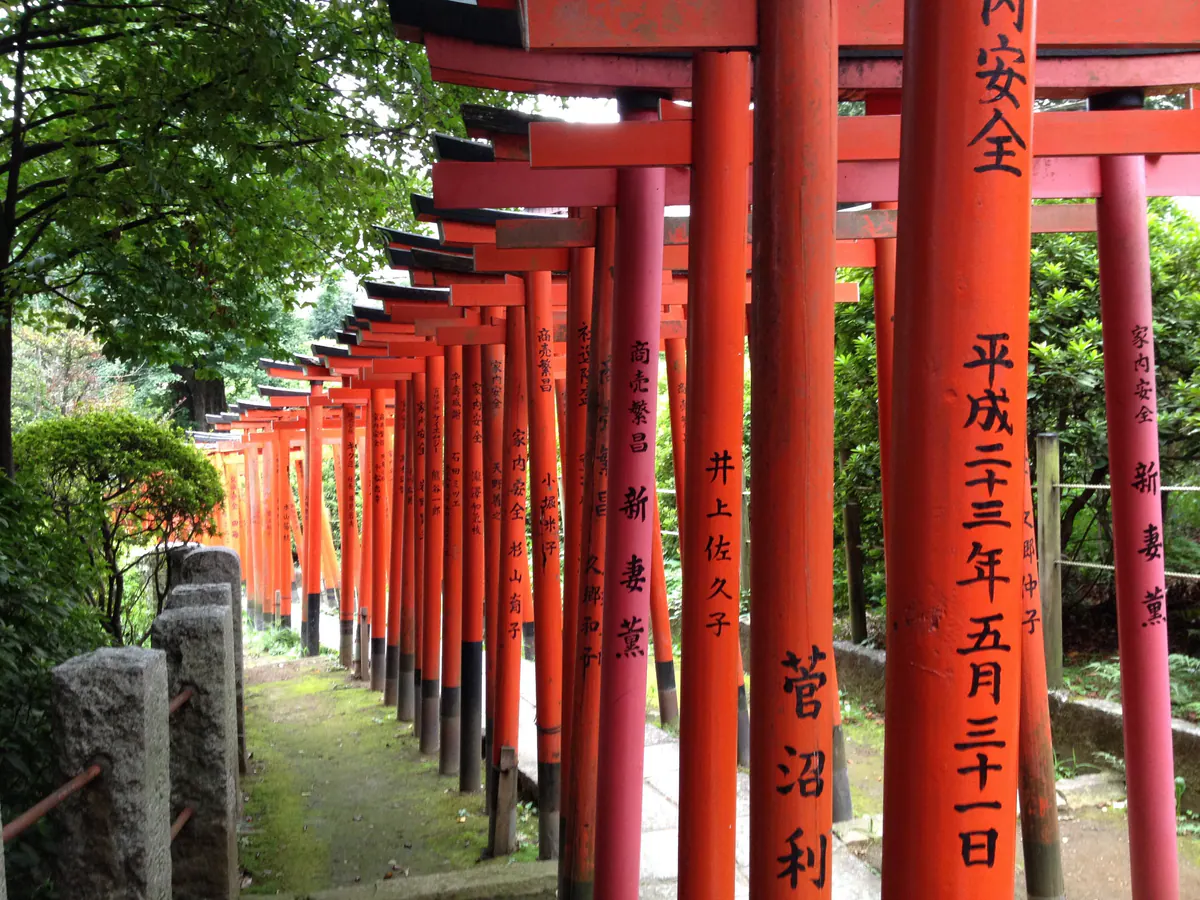
Yanaka and Nezu offer a less hurried counterpoint to Tokyo's major station districts: neighborhood shopping, temple streets and opportunities to notice the scale of everyday city life. Explore around Yanaka Ginza or make Nezu Shrine a focus, then leave room for a cafe stop instead of treating the area as a race between photo spots.
Allow half a day if you want to connect several stops on foot. Check the route, gradients and distances before combining them, especially with a stroller or limited walking tolerance. A shorter outing centered on one station can be more enjoyable than completing an ambitious neighborhood circuit.
These areas are not private theme parks or empty film sets. Keep voices low around homes and places of worship, do not obstruct shop entrances, and ask before photographing people. A quieter Tokyo experience depends partly on how thoughtfully visitors behave.
14. Give the Harry Potter Studio Tour a proper half day
Warner Bros. Studio Tour Tokyo - The Making of Harry Potter is a strong choice for travelers interested in film sets, costumes and production details. It is a studio-tour attraction in Nerima, not a central-Tokyo ride park or a quick substitute for the Harry Potter area at Universal Studios Japan in Osaka.
Check Harry Potter Studio Tour Tokyo ticket options and plan a generous half-day block plus transport, especially if you want to browse, take photographs and stop for food. Confirm the dated entry arrangement and current visitor instructions before purchasing. Keep the rest of the day flexible rather than placing a second distant, timed attraction immediately afterward.
This should be an interest-led choice. If the films mean little to you, a museum, neighborhood walk or food experience may be better value. Families should consider attention spans and walking time, not only whether the children recognize the characters.
15. Reserve a separate day for Tokyo Disney Resort
Tokyo Disneyland and Tokyo DisneySea can be wonderful additions for theme-park fans, but the resort is in Chiba, not in central Tokyo. Treat a park visit as its own day, including travel, queues and the journey back. It does not fit comfortably between Asakusa in the morning and a timed Shibuya attraction in the afternoon.
Choose the park and ticket product deliberately when comparing Tokyo Disney Resort park tickets. A standard 1-Day Passport is for the specified date and park; do not assume a listing mentioning both park names includes entry to both. Seasonal ticket products can differ, so check exactly what is sold for your date and how it works with the resort's app and current attraction-access arrangements.
Allow for more than the admission price when comparing costs: meals, transport, optional paid services and shopping all contribute. For a short first Tokyo visit, replacing a city-sightseeing day with Disney is a valid choice, but it is a replacement, not a free extra day hidden inside the itinerary.
How to turn these ideas into three Tokyo sightseeing days
Use these as three full sightseeing days, not three calendar dates that also include a long-haul arrival and departure. This is a suggested route structure, not a claim that every attraction is open on every day. Check closures, weather and ticket availability, then move whole day groups rather than scattering individual reservations across Tokyo.
Day 1, eastern Tokyo: begin with Senso-ji and Asakusa, browse nearby streets and have lunch. Choose Kappabashi if kitchenware interests you, or continue toward the Sumida River and Skytree if a skyline view matters more. Make the observatory the day's paid anchor rather than trying to add a major Ueno museum too.
Day 2, western Tokyo: visit Meiji Jingu before Harajuku browsing, then continue to Shibuya for lunch, shopping and the crossing. Book SHIBUYA SKY only if it is your chosen viewpoint. Stay in Shibuya for dinner, or choose Shinjuku instead of an additional long shopping session if an evening there is a priority. Do not force in Shinjuku Gyoen as well unless you deliberately shorten other stops.
Day 3, choose your theme: for art and architecture, pair teamLab Borderless with Tokyo Tower and nearby exploring. For a food-and-bay day, choose Tsukiji, then travel to Toyosu for Planets, leaving the evening flexible. For history and slower streets, choose a Ueno museum and a shorter Yanaka outing instead. These are alternatives, not three routes to squeeze into the same day.
With four or five full days, add the unchosen Ueno route, the Studio Tour, a Disney park or a slower neighborhood day. With only one full day, pick either the eastern route or the western route and one personal must-do. Seeing fewer places with time to enjoy them is better than collecting station transfers.
Free things to do in Tokyo, and where to spend your money
A memorable Tokyo day does not require several expensive admissions. Walk through Asakusa, explore Senso-ji's main grounds, visit Meiji Jingu, cross Shibuya's intersection and browse interesting neighborhoods. Shopping streets are free to enter even if shopping and food are not. Separate a free walk from optional paid gardens, exhibitions or facilities within the same area.
Put the budget toward the experiences that change the day for you: one excellent view, a museum you genuinely want to explore, a hands-on class or a theme park you love. Skip a second near-identical paid attraction if it would mean rushing meals or giving up the neighborhood you most wanted to see.
For a simple planning exercise, choose a personal admission allowance first, then add actual dated ticket quotes. Add meals, local transport and shopping separately. Avoid treating an attraction pass as automatic savings: compare the activities you would genuinely buy individually, check reservation requirements, and leave out unwanted attractions from the calculation.
Rainy days, family visits and a more comfortable pace
For rainy days in Tokyo, move toward a Ueno museum, a bookable indoor art experience or shopping in one connected district. Do not assume a popular indoor attraction has same-day tickets because the weather turned bad. Keep an unreserved museum or shopping alternative and check the walking exposure between buildings.
For families, reduce the number of stops before adding more attractions. One main activity, a meal and an optional shorter stop can be plenty. Check child ticket ages, stroller arrangements, toilets and any restrictions before booking. A studio tour, an immersive artwork and a full theme-park day ask very different things of a child.
For anyone with mobility needs, check the actual entrance, lift access and route between stations and venues. A station name alone does not tell you whether the convenient exit has stairs. Ask a venue directly about uncertain access rather than relying on a photograph or a generic accessibility label.
Tokyo also changes with the season: summer calls for shorter exposed walks and indoor breaks, winter evenings get dark earlier, and blossom or autumn-color weekends can be busy. Adapt the day to conditions rather than trying to recreate a photograph taken in a different month.
What should you book before arriving in Tokyo?
Check the availability of any non-negotiable timed experience first: your chosen teamLab venue, the Studio Tour, a preferred observation-deck slot, a class or a Disney park day. The right lead time depends on the venue's sales window and demand; there is no single booking deadline that applies to all Tokyo attractions.
Before paying, confirm the exact location, date, traveler ages, admission level, entry or meeting time, included extras and cancellation rules. A screenshot of a starting price is not a quote for your date. Keep the confirmation and any additional reservation or voucher instructions accessible offline.
Keep ordinary neighborhood walks and most browsing flexible. Do not buy a paid tour just to give an otherwise free day a booking confirmation. You can browse our Japan Trip Planners Klook Kreator store for additional ideas, but select activities because they fit your interests and route, not because they happen to have a promotion.
Tokyo sightseeing questions, answered
Is three days enough for Tokyo? Three full days can cover a satisfying first introduction, especially with one eastern day, one western day and one interest-led day. Four or five gives you more flexibility for museums, shopping, weather and a major attraction outside the center. Count arrival and departure time honestly.
What should I do on my first day? After a long flight, choose a meal and an easy walk near the hotel. Save an expensive nonrefundable time slot for a day when a flight delay or slow airport transfer is less likely to disrupt it.
Is Tokyo enjoyable without lots of paid attractions? Yes. Shrines, temple grounds, neighborhood walks, architecture and browsing can create a very full trip. Budget separately for meals and transport, and check whether particular gardens or exhibitions charge admission.
Should I buy a JR Pass for Tokyo sightseeing? Not simply for this list. Local journeys involve different rail companies and subways; a nationwide intercity pass is a separate decision based on a much larger route. Plan local transport around your actual journeys and compare any pass with the fares you would otherwise pay.
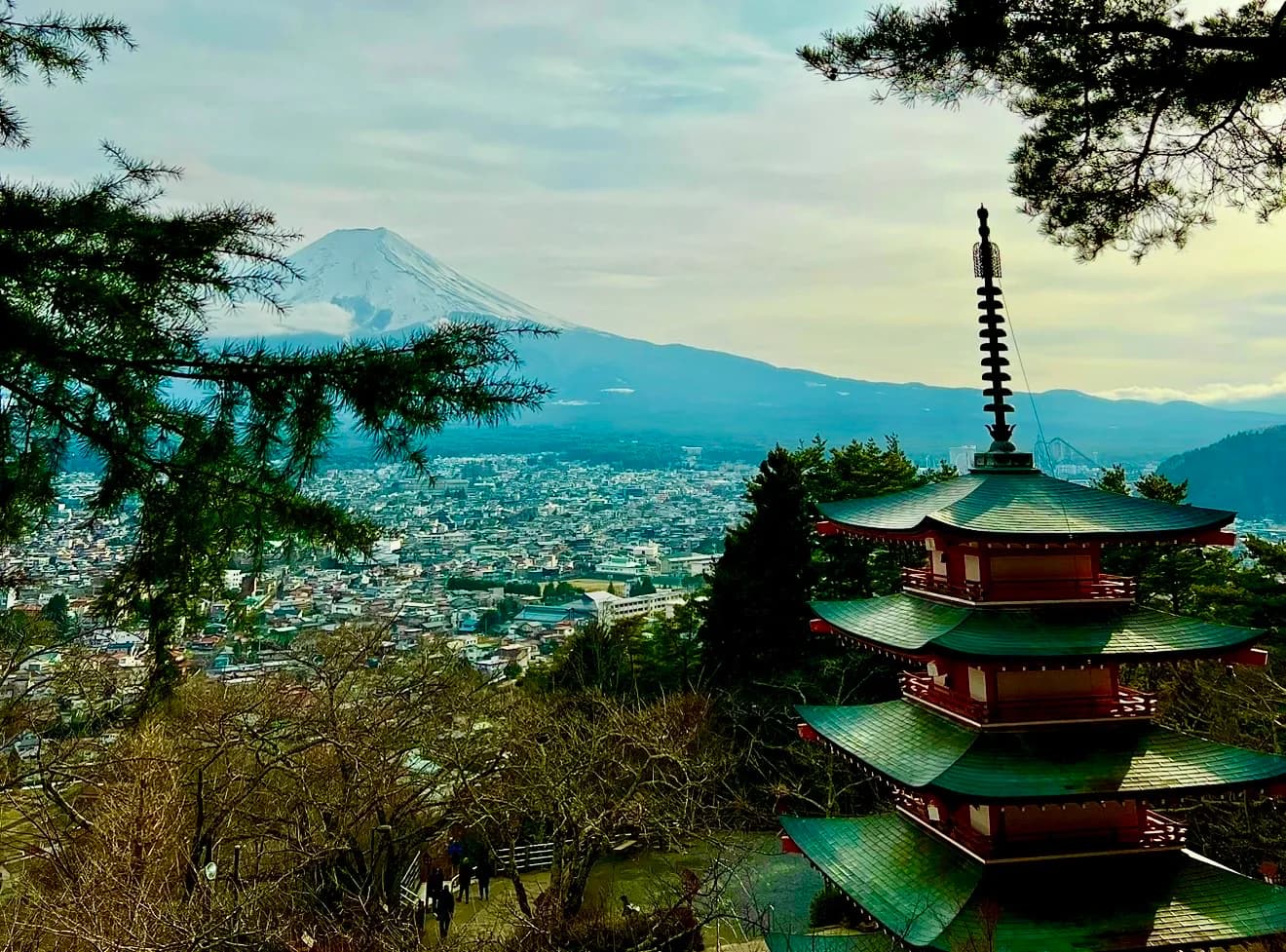
Can I see Mount Fuji from Tokyo? Sometimes, from suitable viewpoints in clear conditions, but never build the value of an observation ticket around a guaranteed Fuji view. A dedicated Fuji-area outing is a different day trip, outside central Tokyo, and also depends on the weather.
Build a Tokyo trip that feels like yours
Start with the two or three experiences you would be disappointed to miss. Find them on our interactive Japan map, add nearby alternatives, and arrange the days in the itinerary builder. Use a prebuilt route as a starting point, then remove places that do not suit your pace, budget or interests.
For more structured regional reading, explore our Tokyo travel guide; for the basics of moving between stops, read our local transportation guide.
There is much more to Tokyo than one article can cover, from small gardens and neighborhood restaurants to specialist shops and seasonal discoveries. Continue exploring on our map, and leave enough space in the schedule to enjoy the places you find along the way.
Travel details can change. Confirm current schedules, opening hours, reservation rules, prices, and entry requirements with the relevant official provider before booking or traveling.