

Parking in Japan: Rules, Costs, and How Coin Parking Works
Japan's paid parking lots are usually easy once you know the pattern. The main difference is whether you pay before parking or pay after you return, and the signs at the machine usually tell you which system you are using.
Affiliate disclosure: Some links in this article may earn Japan Trip Planners a commission at no extra cost to you. Recommendations are included when they are genuinely useful for planning, and you should still compare current prices, terms, and official provider information before booking.
How does parking in Japan work?
Parking in Japan usually means using a marked private or public lot and following that lot's posted rules. Small pay-to-park lots, often called coin parking, are common near stations, attractions, shopping streets, restaurants, hotels, shrines, onsen towns, and rural sightseeing areas. Most use either a pay-before system or a pay-after system with a gate, ticket, license plate number, or locking plate beneath the car.
The good news is that most lots follow one of two patterns: pay before you park, or pay after you return. If you can identify which one you are using, the rest becomes much calmer. Look for the machine, the space numbers, whether there is a gate or ticket, and whether the space has a locking plate under the car.
Do not assume every lot accepts credit cards. Some machines accept coins and bills, some accept IC cards or QR payment apps, and some are cash-only. Keeping some yen cash in your rental car is still a very practical habit.
Pay-before parking: choose your time first
In a pay-before lot, you pay before leaving the car. These are common at some sightseeing areas, private lots, beaches, parks, smaller attractions, and facilities where the parking stay is expected to be straightforward. The machine or attendant may ask you to choose a time block, such as a fixed number of hours or a full-day parking fee.
The usual flow is simple: park in an open space, check whether the space has a number, go to the machine or attendant, choose the correct time or fee option, pay, then place the receipt or parking ticket on the dashboard if the lot requires it. If there is no dashboard ticket requirement, keep the receipt anyway until you leave.
The important risk with pay-before parking is time. If you paid for two hours and stay longer, you may need to return to the machine to extend the parking time, or you may risk a penalty depending on the lot. If you are visiting a castle, theme park, beach, large garden, hike, or museum, give yourself more time than you think you need.
Pay-after parking: pay when you return
Pay-after parking is very common in Japan's coin parking lots. You park first, enjoy your stop, then pay at the machine before leaving. This system is useful because you do not need to guess the exact length of your stay ahead of time.
There are several versions. A gate-style lot gives you a ticket when you enter. Keep that ticket safe, then insert it into the payment machine before leaving or at the exit gate. A space-number lot asks you to remember your parking space number, enter it at the machine when you return, pay the displayed amount, and then leave. A license-plate system may ask for part of your plate number instead of a space number.
Some pay-after lots have a small locking plate or flap under the car. After a short grace period, the plate rises and holds the vehicle in place. When you return, enter your space number at the machine, pay, wait for the plate to fully lower, and only then drive away. Never try to force the car over the plate. Wait until it is completely down.
How to use locking-plate coin parking
Locking-plate lots are one of the systems that surprise travelers most. You pull into a numbered space, and a small metal plate beneath the center or side of the car may rise after a few minutes. That plate is normal. It is not an emergency and it does not mean you did anything wrong.
Before walking away, take a quick phone photo of your space number and the machine. When you come back, go to the payment machine, enter your space number, confirm the amount, pay, and wait. The machine should release the space and the plate should lower. Look under the car if you are unsure. Once the plate is fully down, you can leave slowly.
If the plate does not lower after payment, do not drive over it. Look for an intercom, phone number, attendant button, or emergency contact on the machine. Translation apps can help with the machine screen, but the space number and payment amount are usually the most important pieces.
Read the price board before you commit
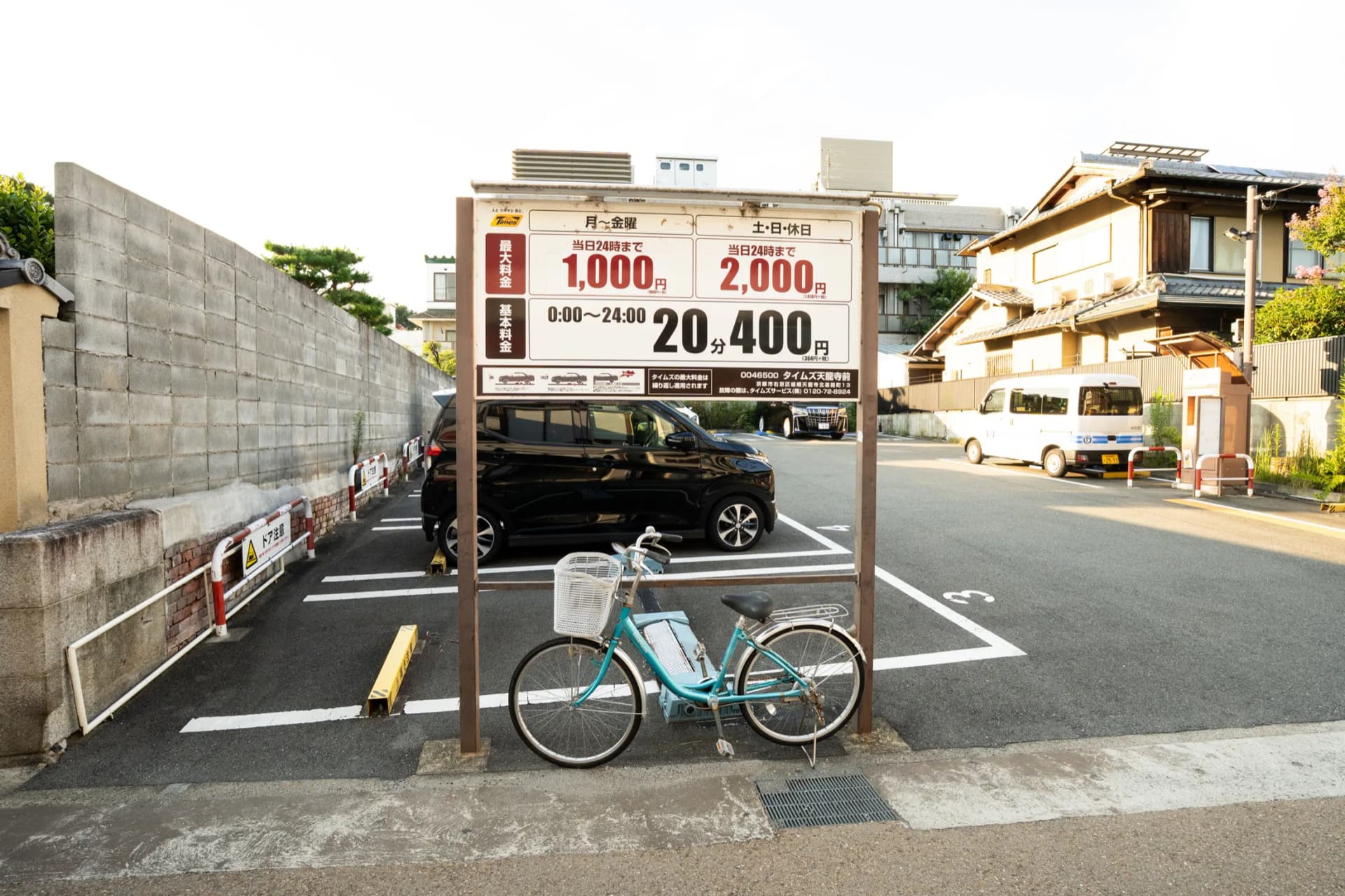
Japanese parking signs often show several rates at once. You may see a daytime hourly rate, nighttime hourly rate, maximum fee, weekday maximum, weekend maximum, overnight fee, or special event pricing. The maximum fee is the number most travelers care about for longer stops, but it may only apply during certain hours or on certain days.
For example, a lot may be inexpensive for a short daytime visit but have a different overnight rule. Another lot may have a daily maximum on weekdays but not on weekends or holidays. Near famous attractions, parking prices can rise during festivals, peak seasons, fireworks, cherry blossom season, autumn foliage, or local events.
Use a translation app on the sign if needed, and check the posted maximum before leaving the car for several hours. When in doubt, choose an official attraction lot, hotel lot, large shopping center lot, or a clearly marked coin parking lot with a visible machine and posted contact information.
Hotels, attractions, malls, and restaurants may validate parking
Some hotels, department stores, shopping malls, restaurants, museums, and attractions offer discounted or validated parking. The system varies. You may need to bring the parking ticket inside, show it at the front desk, scan it at a checkout counter, or receive a validation stamp or barcode before returning to the payment machine.
If you are staying at a hotel with a rental car, ask the hotel before arrival whether parking is on-site, first-come first-served, reservation-only, height-restricted, paid separately, or handled through a nearby partner lot. Many city hotels have mechanical parking towers with size limits, and larger vehicles may not fit.
At malls and large attractions, do not throw away the entry ticket. Even if parking is free for a certain amount of time, the machine may still need the ticket to calculate the discount.
Rental car tips for parking in Japan
If you are renting a car in Japan, add parking to the plan before the day gets busy. Rural attractions, mountain viewpoints, waterfalls, volcano areas, coastal towns, and smaller cities can be much easier by car, but the day feels smoother when you know roughly where you will park before you arrive.
Keep coins, 1,000-yen bills, your rental car paperwork, and the car's license plate number easy to find. Take a photo of your parked location, the space number, and the nearest landmark. In a large lot, that tiny habit can save a surprising amount of time later.
For road trips outside big train-centered cities, compare rental car options before your route is final. You can compare Japan rental cars here. A car can be especially useful for places where buses are infrequent, attractions are spread apart, or you want to visit mountains, forests, beaches, volcanoes, onsen towns, and lesser-traveled viewpoints at your own pace.
Before you drive away
Before leaving any paid parking space, pause for a final check: payment finished, receipt or ticket returned if needed, locking plate lowered, gate opened, people clear of the car, mirrors checked, and navigation set before you move. Japan's lots can be tight, so slow movements matter.
If you are unsure whether payment worked, do not panic. Look at the machine, check for a lowered plate, and use a translation app on any message. Most parking problems are solved by confirming the space number, paying the correct fee, and waiting a few seconds for the system to release.
Paid parking in Japan is not something to fear. Once you understand the difference between pay-before and pay-after lots, it becomes one more small travel skill that makes road trips, mountain days, onsen towns, and countryside stops much easier.
Travel details can change. Confirm current schedules, opening hours, reservation rules, prices, and entry requirements with the relevant official provider before booking or traveling.
Related Japan Planning Articles
Trip Planning · Travel Tips · Tokyo · Kansai
Best-Value Japan Itinerary Packages for a $3,000 Budget
Trip Planning · Travel Tips · Tokyo · Kansai
Best 2-Week Japan Itinerary to Buy for Tokyo, Kyoto & Osaka
Trip Planning · Travel Tips · Tokyo · Kyoto · Osaka