
Is Planning a Family Trip to Japan a Good Idea?
Japan can be a wonderful family trip without turning every day into a logistics exercise. Here is how to choose a route, pace the days, handle transport and hotels, and keep the trip enjoyable for children and adults.
Affiliate disclosure: Some links in this article may earn Japan Trip Planners a commission at no extra cost to you. Recommendations are included when they are genuinely useful for planning, and you should still compare current prices, terms, and official provider information before booking.
Yes, Japan can be a wonderful family trip
Japan can be a genuinely rewarding place to travel with children. It offers a remarkable mix of big-city energy, hands-on museums, trains, aquariums, theme parks, gardens, beaches, food halls, character shops, temples, castles, snow, and quiet nature.
The key is to plan with a little structure. The trains are excellent, but stations can be large. Hotels can be compact, and popular attractions can be busy. Choose a few comfortable bases, group attractions by area, leave room for snacks and rests, and keep the plan visible enough that the entire family knows what comes next.
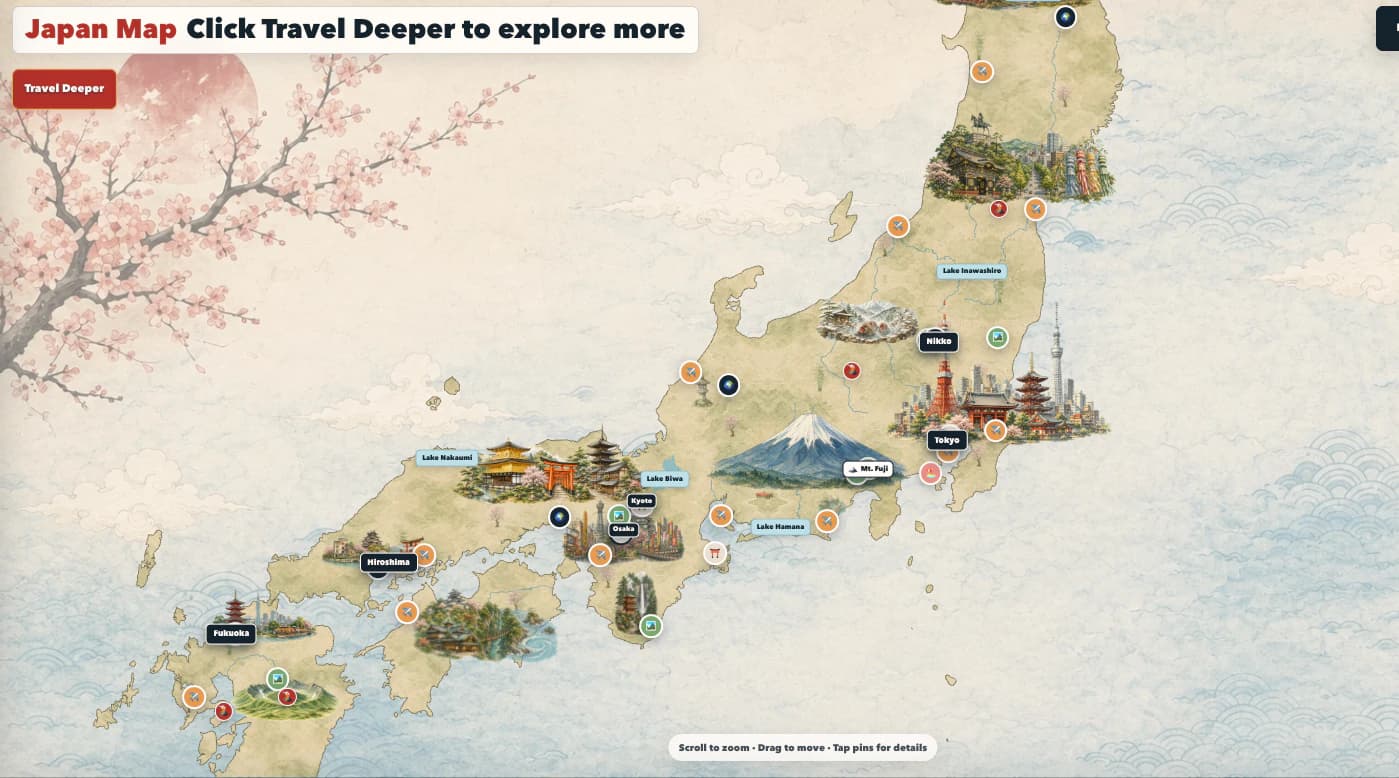
Use the Interactive Map of Japan to collect family-friendly ideas and the Itinerary Builder to turn the best ones into calm, realistic days.
Why Japan works so well for families
Japan makes it easy to mix different types of days. A Tokyo morning at an aquarium, a character store, or a science museum can lead into a garden, shopping street, observation deck, or excellent food hall. Kyoto can balance a shrine or temple with a bamboo grove, river walk, train ride, monkey park, or sweet shop. Osaka, Fukuoka, and Yokohama are especially good for families who enjoy lively urban areas with large indoor attractions and easy evening food options.
There is also a useful range of travel styles. Families who want a city-first trip can focus on Tokyo, Kyoto, and Osaka. Families who want beaches, pools, and a slower pace can look toward Okinawa. Families with older children who love snow, scenery, animals, and outdoor experiences may prefer Hokkaido, Nagano, Nikko, Hakone, or a regional road trip. You do not need one perfect Japan itinerary. You need a route that suits your family.
The biggest advantage is variety. You can keep a child who loves Pokemon, trains, animals, anime, castles, science, or swimming engaged while still building a trip with culture, nature, and memorable meals for the adults.
What needs extra thought before you book
The practical details are where families benefit from slowing down. Check hotel room layouts and bedding before booking instead of assuming every room fits the same way. Look at the walk from the station, not only the hotel name.
Think about luggage before a multi-city route. Reduce the number of hotel changes when you can, use hotel luggage storage, and consider luggage forwarding for longer moves. The itinerary should show the move as a real block of time, not pretend that a Tokyo-to-Kyoto train ride is an invisible gap between two full sightseeing days.
Reliable data makes station navigation, hotel contact, translation, ticket confirmations, and weather checks far less stressful. Start by comparing NINJA WiFi, which offers pocket Wi-Fi, physical SIM cards, and eSIMs. Japan Wireless remains another pocket Wi-Fi option for families who want to share one connection. Choose based on the number of devices, the adults using them, and each phone's compatibility.
Plan differently for toddlers, school-age children, and teens
Families with toddlers or preschoolers usually benefit from a slower plan with fewer hotel moves, parks or open space every day, midday breaks, and attractions that do not require long quiet stretches. Choose one major outing, then leave the afternoon flexible. A playground, garden, aquarium, train ride, department-store food floor, or hotel-pool break can be just as valuable as another famous landmark.
School-age children often enjoy a little more structure when they can see the reward. Let them help choose a character shop, animal experience, aquarium, ropeway, castle, themed museum, snack stop, or one special meal. A daily highlight gives them ownership without forcing the entire route to become a checklist of children's attractions.
Teens can be excellent Japan travel partners when the trip gives them room for their real interests. Anime, manga, fashion, gaming, food, photography, shopping, skiing, beaches, hiking, history, and pop culture can all shape the route. Give them a few choices on the map before you lock the itinerary, and make sure there is some unstructured time to explore a neighborhood rather than scheduling every minute.
Choose a family-friendly route instead of chasing every region
For a first family trip, Tokyo, Kyoto, and Osaka remain a strong foundation. A 7-day trip is usually best with two bases, not three or four. Ten days lets Tokyo, Kyoto, and Osaka breathe a little more. A two-week trip can add Hiroshima and Miyajima, Hakone, Nikko, Okinawa, Hokkaido, or another region that matches your family's interests.
Use the destination guides to compare the regions, then start a family itinerary before you make scattered hotel or activity reservations.
Build days around one priority and one area
A family day should usually have one clear priority: a timed attraction, a major temple area, an aquarium, a theme park, a day trip, a special museum, or a scenic outdoor stop. Add a few nearby flexible ideas around it, but do not make every possible activity a mandatory event. The goal is to preserve enough energy for the priority to feel enjoyable.
Start full sightseeing days around 9:00 AM when it makes sense, especially for places that become busy later. Then schedule realistic transport time, including the walk to the station, platform navigation, transfers, and the walk out at the other end. A 25-minute rail estimate can become much longer with a stroller, luggage, young children, a crowded platform, or an unfamiliar station exit.
Meals can stay flexible unless a restaurant is a real family priority. If you are spending hours in an area such as Asakusa, Ueno, Akihabara, Shibuya, Dotonbori, Nishiki Market, or a museum district, build in a food window nearby instead of traveling across the city for a generic lunch. Your calendar should support the family, not make everyone late and hungry.
Reserve the right things, but keep a backup plan
Reserve timed attractions, popular theme-park days, special tours, major seasonal experiences, and any restaurant that truly matters. Keep confirmation details with the correct calendar event, and check the official provider's current entry rules, age requirements, hours, weather policies, and cancellation terms before you pay.
Klook is one place to compare eligible Japan activity tickets; code ADVENTURRA may offer savings on eligible bookings. Always compare current provider terms and choose the option that makes sense for your family.
Every family itinerary also needs a rainy-day backup. Keep a list of nearby malls, aquariums, museums, cafes, indoor play spaces, department stores, and covered markets for the cities where you are staying.
Keep everyone on the same page
Start on the Interactive Map, save the ideas each family member cares about, and see which places are actually near each other. Then use the Itinerary Builder to give each day a clear shape with transport, hotel, ticket, and note details where they will be needed.
Use the budget calculator to keep big categories visible, including flights, hotels, transportation, activities, food, shopping, and a cushion for surprises. When the route is ready, create a view-only share link so another adult, a grandparent, or an older child can see the plan without changing the working version.
The answer is yes, with the right pace
Planning a family trip to Japan is a good idea when you build it around your actual family instead of someone else's perfect-looking itinerary. Choose a few bases, give the children meaningful choices, plan the practical moves honestly, protect rest, and let the map help you see what truly belongs together.
Start a family itinerary, explore the Interactive Map of Japan, or browse the Japan travel guides when you are ready to begin.
Travel details can change. Confirm current schedules, opening hours, reservation rules, prices, and entry requirements with the relevant official provider before booking or traveling.