
Renting a Car in Rural Japan: When Driving Beats the Train
Japan's trains are exceptional, but they cannot reach every mountain trail, volcanic landscape, forest road, coastal viewpoint, or small town. A well-timed rental car can turn the hardest part of a rural itinerary into its greatest freedom.
Affiliate disclosure: Some links in this article may earn Japan Trip Planners a commission at no extra cost to you. Recommendations are included when they are genuinely useful for planning, and you should still compare current prices, terms, and official provider information before booking.
Use Japan's trains first, then rent a car strategically
Japan's rail system deserves its reputation. In Tokyo, Osaka, central Kyoto, Yokohama, Nagoya, Fukuoka, and other major urban areas, a car can create more problems than it solves. Trains and subways avoid traffic, parking searches, tolls, and the stress of navigating narrow streets while adjusting to driving on the left.
The calculation changes outside the major transportation networks. A rural train may only reach the nearest town, while the mountain trail, waterfall, onsen, coastal viewpoint, or countryside restaurant you actually want to visit is another bus ride or expensive taxi away. Some buses run only a few times per day. Miss one connection and an entire afternoon can disappear.
The best Japan itineraries do not choose between trains and cars as if one must handle the entire trip. Take the Shinkansen between major regions, collect a rental car near a regional station or airport, explore the places where it creates real freedom, then return it before entering another dense city.
A car gives you freedom beyond the last useful station
The biggest benefit of renting a car is not speed alone. It is control. You can leave before the first sightseeing bus, stay for sunset without worrying about the final return service, change the route when clouds hide a mountain, and stop when a roadside view turns out to be better than the attraction you originally planned.
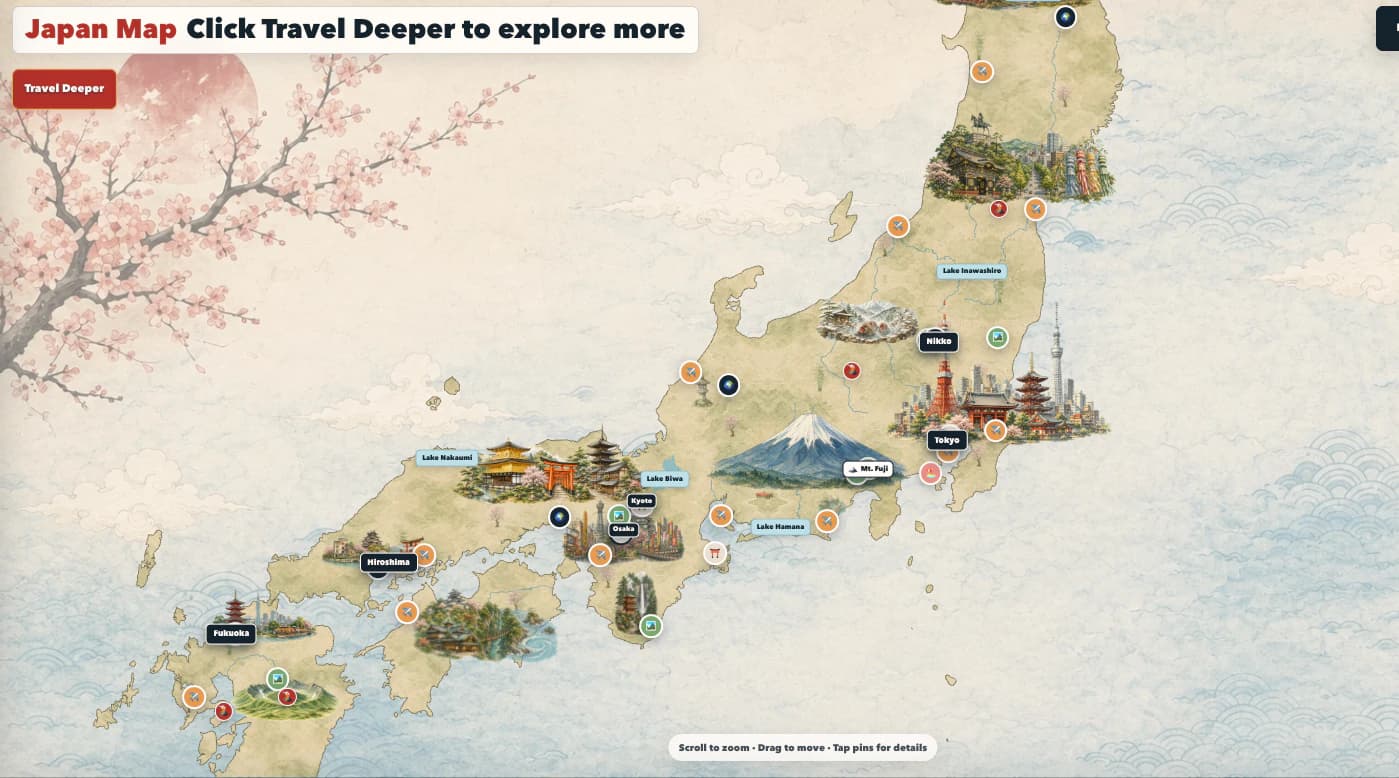
That flexibility matters in places built around landscapes rather than stations. Volcano routes around Mount Aso, broad areas of Hokkaido, the forests and waterfalls of rural Wakayama, the coasts of Okinawa, the Japanese Alps, the Noto Peninsula, inland Shikoku, northern Tohoku, and many island communities become much easier to explore when the day is not controlled by a sparse timetable.
Driving also opens the spaces between famous destinations: a small pottery town, a local produce stand, a family-run restaurant, a quiet shrine, a roadside onsen, or a lesser-traveled city that would be difficult to justify as a separate train journey. Those unplanned stops are often what make a road trip feel personal.
Mountains, volcanoes, forests, and coastlines become realistic day trips
Nature-heavy days are where a rental car usually creates the greatest advantage. Trailheads, scenic roads, ropeways, lakes, waterfalls, and observation points can sit far apart even when they appear close on a map. A car lets you connect several stops without repeatedly returning to the same bus terminal.
In volcanic regions, weather and safety restrictions can change the plan quickly. If a crater viewpoint closes or visibility disappears, a car gives you the option to move toward a museum, onsen town, lake, or another side of the mountain. In forests and highlands, it can help you reach an early trailhead and return before dark instead of stretching the hike around a limited bus schedule.
The same is true along rural coastlines. Beaches, capes, fishing towns, bridges, and sunset viewpoints may be separated by roads that have no practical rail alternative. Driving turns those isolated points into one coherent route rather than several disconnected excursions.
- Hokkaido: national parks, flower fields, lakes, ski areas, and long distances between towns.
- Okinawa: beaches, castle ruins, waterfalls, northern forests, and attractions beyond the Yui Rail corridor.
- Kyushu: Mount Aso, Kirishima, Takachiho, hot-spring towns, peninsulas, and volcanic scenery.
- Tohoku and the Japanese Alps: mountain roads, seasonal foliage, rural onsens, trailheads, and smaller cities.
- Shikoku and the San'in coast: temples, valleys, islands, coastal viewpoints, and routes with limited public transportation.
Groups, families, and luggage can make driving more practical
A rental car can become more economical when several travelers share the daily price, fuel, tolls, and parking. It also reduces the repeated work of carrying bags through stations, finding elevators, boarding local buses, and storing luggage between hotel check-in times.
Families may appreciate having child supplies, weather layers, snacks, and purchases nearby. Travelers with mobility considerations can reduce long station walks, although the vehicle, parking, hotel access, and each attraction still need to be checked carefully. Choose a car large enough for both passengers and closed luggage storage; the smallest inexpensive model may not fit several full-size suitcases.
Convenience does not mean leaving valuables visible in the car or treating every roadside shoulder as parking. Use designated parking, keep the cabin clear, and confirm whether the hotel offers parking before reserving the vehicle.
There are trips where a rental car is the wrong choice
Do not rent a car merely because it feels adventurous. Central Tokyo, Osaka, Kyoto, and other dense cities usually have excellent public transportation and limited or expensive parking. The Tokaido corridor between Tokyo, Nagoya, Kyoto, and Osaka is generally better handled by train unless the itinerary deliberately leaves the cities for rural stops.
Driving is also a poor fit after a long international flight, after drinking alcohol, during severe weather, or when the driver is uncomfortable with left-side traffic, narrow roads, tunnels, mountain curves, or Japanese road signs. A rural itinerary should feel freer, not more exhausting.
Consider a short regional rental instead of keeping the car for the whole vacation. One-way rentals can be useful, but drop-off fees may apply. Returning the car near the station before a Shinkansen journey often gives you the best of both systems.
Compare the real cost, not only the rental price
The advertised daily rate is only the beginning. Add insurance or the selected damage waiver, fuel, expressway tolls, parking, an ETC card rental when available, child seats, winter equipment, and possible one-way return fees. Then compare that total with the train, bus, taxi, and luggage-forwarding costs the car would replace.
Expressways can save substantial time, but tolls add up. An ETC card lets compatible toll gates record charges electronically, with the rental company typically settling the total when the car is returned. Some regions offer visitor-oriented expressway passes, but availability and eligibility can change, so ask the rental company before booking around one.
For one traveler moving between well-connected cities, public transportation may still be cheaper. For three or four people exploring several rural stops in one day, the car can compare much more favorably while also protecting hours that would otherwise be spent waiting.
Prepare the correct documents before arriving in Japan
Many international visitors need an International Driving Permit issued before departure under the 1949 Geneva Convention, together with their original license and passport. Different procedures apply to licenses from certain countries and regions, including the use of an official Japanese translation. A digital or card-style permit is not a substitute when Japan requires the booklet-format document.
Confirm the current requirement for the exact country that issued your license before paying for a car. Japan drives on the left. Seat belts are required, handheld phone use while driving is illegal, alcohol and driving must never be combined, and vehicles must stop before railway crossings. Winter roads may require snow tires or chains, and mountain routes can close because of weather, volcanic activity, or seasonal conditions.
The Japan National Tourism Organization rental-car guide explains current license requirements and driving considerations. Read the official guidance before the trip, then check the rental company's rules, emergency process, fuel policy, insurance coverage, and return instructions at pickup.
Build a road-trip day with breathing room
A good road-trip day is not a race between pins. Start with one priority landscape or activity, add two or three nearby stops, and leave room for parking, weather, meals, scenic pauses, and the slower pace of unfamiliar roads. Avoid planning a long mountain drive immediately after landing or before an international departure.
Download offline navigation before leaving reliable service, keep the rental company's phone number available, and save the destination in Japanese as well as English. Recheck the route on the morning of travel because road closures and seasonal access can change. If the day includes a hike, onsen, or sunset viewpoint, work backward so the return drive is comfortable and safe.
A rental car is most valuable when it removes pressure from the itinerary. The goal is not to cover the greatest distance. It is to reach the parts of Japan that trains cannot show you while still having enough time to enjoy them.
Compare a rental only after the route proves you need one
Mark every rural stop on the map, check the public-transportation alternative, and identify the exact station or airport where the rental should begin and end. Once the car clearly saves time or unlocks places that would otherwise be impractical, compare vehicle size, insurance, pickup hours, drop-off fees, winter equipment, and cancellation terms rather than choosing on headline price alone.
Japan Trip Planners may earn a commission if you reserve through the link below, at no extra cost to you. Prices, providers, terms, and availability are controlled by the booking platform and rental company, so confirm the final details before paying.
Compare rental cars for your Japan road-trip dates.
Travel details can change. Confirm current schedules, opening hours, reservation rules, prices, and entry requirements with the relevant official provider before booking or traveling.