
Christmas and New Year in Japan: How to Plan Your Vacation
Christmas lights, a special dinner, and a first shrine visit can make a memorable Japan vacation. The key is planning around the very different rhythms of December 25 and January 1.
Affiliate disclosure: Some links in this article may earn Japan Trip Planners a commission at no extra cost to you. Recommendations are included when they are genuinely useful for planning, and you should still compare current prices, terms, and official provider information before booking.
Is Christmas and New Year a good time to visit Japan?
Yes, if you enjoy winter evenings, festive lights, and a slower start to the new year. Christmas Day in Japan is generally a normal working day, while New Year is a major holiday period with family gatherings, busy travel routes, and changes to business hours. A vacation covering both needs two different kinds of planning.
Our recommendation is to do your priority museum visits, shopping, and Christmas events before the year-end closures, then leave room for neighborhood walks, a confirmed meal reservation, and a shrine or temple visit around January 1. A trip built around a long list of small restaurants and indoor attractions will need more checking than one built around a few flexible days.
JNTO describes the usual New Year holiday window as roughly December 29-January 3, with the exact break affected by the calendar. Use that as a planning alert, not a universal closure schedule. See its December travel guide for the seasonal overview.
Do people celebrate Christmas in Japan, and is December 25 a holiday?
Christmas is celebrated in Japan, but December 25 is not a national holiday. You will find seasonal decorations, Christmas menus, and special events alongside ordinary working life. Shops and transport do not generally shut down simply because it is Christmas, although each business still has its own opening days. JNTO confirms the distinction in its winter experiences guide.
Christmas Eve is particularly associated with couples and special dinners. Fried chicken, including KFC, is a familiar seasonal custom, but it is an option rather than a requirement for your trip. If you want a particular Christmas meal, check the restaurant's own menu and reservation rules. A spontaneous walk followed by an ordinary local dinner can be just as enjoyable.
For families, choose one festive outing close to the hotel and protect some downtime. After a long flight, a short lights walk and an early meal are usually easier to enjoy than crossing the city for several booked events.
Where to spend Christmas in Japan
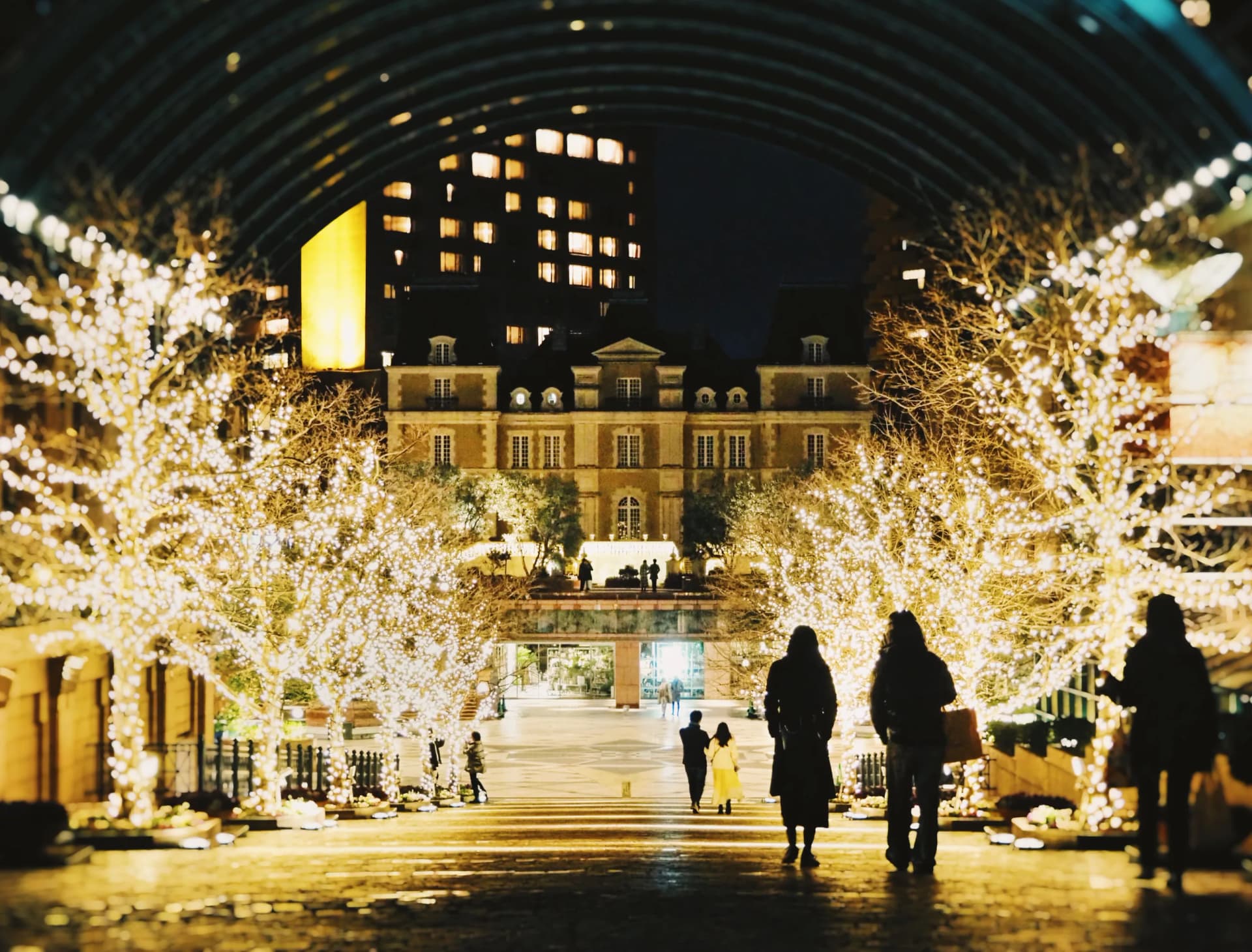
Tokyo suits a city Christmas. GO TOKYO highlights winter lights around Marunouchi, Yebisu Garden Place, Omotesando, and Roppongi Hills. Choose one area for your evening, then find dinner nearby. Its December guide is a useful starting point; follow through to the organizer for this season's dates, admission rules, and lighting hours.
Kyoto or Osaka suits a trip that continues into New Year. Choose between them using the activities you want and the transport you will actually take. We would favor several nights in one well-connected hotel over moving between the two with luggage during the holiday break. Compare our Kyoto and destination guides before choosing your base.
A snow or hot-spring stay suits a slower vacation. Hokkaido, Nagano, and Niigata are established winter-sports destinations, but Christmas snow and lift openings depend on the resort and conditions. JNTO's January guide covers the winter options. Book the accommodation, transfer, equipment, and meals as one workable plan, and leave room for weather disruption.
Will Christmas lights still be on after December 25?
Some will, but a Christmas event and a winter illumination are not necessarily the same thing. Christmas markets and Christmas-specific displays may end on December 25, while other light displays continue into January or beyond. JNTO's December overview describes both patterns; verify the current organizer schedule for each event.
For each display you save, record its final date, daily lighting hours, nearest station, ticket requirements, and an indoor place nearby to warm up. Put anything that ends on Christmas Day early in your vacation. Do not move it to December 28 simply because the evening looks less busy in your itinerary.
A manageable Christmas Day plan is one daytime neighborhood, a rest at the hotel, an early dinner, and one evening display. Book any special meal first and fit the walk around it.
What closes in Japan over New Year?
Expect individual closures and shorter hours, especially around December 29-January 3. Museums, gardens, restaurants, shops, and other facilities can follow different schedules. The fact that a place is outdoors does not mean it will remain accessible: Shinjuku Gyoen's official admission page, for example, lists December 29-January 3 as closed days.
Build a small closure checklist for the places you most want to visit. Record the exact date you intend to go, the holiday opening notice, the last admission time, and the date you checked it. A normal weekly listing in a map app may not reflect a special year-end notice.
For January 1, confirm your hotel breakfast and at least one realistic lunch or dinner option. Ask the hotel about nearby businesses operating that day. Have a simple backup meal available, particularly with children or dietary restrictions. A convenience store can be useful, but check the branch instead of making it your only plan.
Do not assume everything reopens on January 2, or that the entire country stays closed until January 4. Check each stop separately and move closure-sensitive sightseeing to another day.
What can visitors do on New Year's Eve and New Year's Day?
New Year offers a chance to experience a more traditional side of Japan. Hatsumode is the first shrine or temple visit of the year. JNTO's winter guide describes this custom and notes popular Kyoto shrines such as Heian Jingu and Fushimi Inari Taisha. Visitors can join respectfully, following signs and staff directions.
Popular sites can be very crowded. Pick one visit, allow time to queue, and avoid putting a tight meal or train reservation immediately afterward. A daytime visit can be easier for families than staying out until midnight. Keep entrances and worship areas clear, and follow local photography rules.
Some Buddhist temples hold joya-no-kane, the ringing of bells 108 times around the turn of the year. GO TOKYO discusses the tradition in its December guide. Attendance, participation, tickets, and timing depend on the temple. Check before traveling there, and do not assume that visitors can ring the bell.
For a countdown party or fireworks, choose a specifically announced event and confirm its entry rules. Plan the journey back before buying tickets; a late-night celebration is much less enjoyable when the return route is uncertain.
Do trains run during New Year in Japan?
Yes, but New Year is a busy travel period, and the service you need may have a holiday timetable. Reserve essential intercity journeys as soon as the relevant operator's booking window allows. For a group, check that seats together are actually available before committing to hotels in several cities.
JR Central operates Nozomi trains on the Tokaido and Sanyo Shinkansen with all seats reserved during designated peak periods. Check the dates and boarding rules on its official Nozomi peak-period page. Other services may retain unreserved cars, but that does not guarantee a seat. A rail pass also does not guarantee a seat or make every train eligible; check the pass conditions and make the necessary reservation.
Do not assume your train or subway runs all night on December 31. Check the specific line, station, final departure, and connections when the holiday timetable is released. Keep a return option that works even if your evening ends earlier than planned.
Our JR Pass calculator can help compare the cost of your planned journeys. Treat seat availability and holiday schedules as separate checks.
Book the holiday meals and hotel nights that matter
Toshikoshi soba is associated with New Year's Eve, while osechi ryori is a collection of traditional New Year dishes. Ozoni is a New Year soup with regional variations. JNTO explains these foods in its New Year food guide. Ask your hotel or restaurant whether a seasonal meal is offered, whether it needs a reservation, and what is included.
For a ryokan stay, check the meal plan before paying. A room-only booking and a stay with dinner and breakfast create very different holiday logistics. Confirm check-in and dinner times, especially if your arrival depends on a rural bus or a long rail connection.
Compare the total cost across the full stay, along with cancellation terms and transport. JNTO warns that early-January travel can bring higher prices and limited availability. Our preference is to reserve the critical nights once the route is decided, then build flexible sightseeing around them.
A realistic Christmas and New Year Japan itinerary
This suggested December 24-January 3 itinerary uses Tokyo and one Kansai base, with arrival in Tokyo and departure from Kansai. It is a planning example, not a package or a promise of attraction openings. Adjust it to your flights, reservations, and the current holiday notices.
- December 24: arrive in Tokyo. Check in, eat near the hotel, and add a short lights walk only if you have energy.
- December 25: Christmas in Tokyo. Choose one neighborhood and a confirmed festive evening plan.
- December 26-27: priority Tokyo sightseeing. Put museums, gardens, and specific shops here after checking their opening days.
- December 28: move to Kyoto or Osaka. Reserve the train and leave the rest of the day light. This date can still be busy.
- December 29-30: explore from your Kansai base. Mix walks with attractions whose holiday opening hours you have confirmed. Buy any essentials before the year turns.
- December 31: stay local. Have a planned dinner, then attend a confirmed temple event or enjoy a quiet evening.
- January 1: one shrine or temple visit. Leave time for crowds, a warm meal, and rest.
- January 2: a flexible final day. Choose from places that have reopened, or revisit a neighborhood you enjoyed.
- January 3: airport transfer and departure. Check the holiday timetable and give the journey a generous buffer.
If you fly home from Tokyo, adapt the final nights so the return journey is not a rushed connection to an international flight. If you only have a week, choose one region rather than compressing every stop above.
What is the weather like, and what should you pack?
Pack for your actual route. Tokyo's winter is often dry and feels colder after dark; snow is not a dependable part of a city Christmas. GO TOKYO's winter guide recommends warm outerwear and accessories. A trip to snowy mountains or northern Japan requires a different footwear and clothing plan.
Bring layers you can remove on warm trains, a coat, gloves, a scarf, and comfortable shoes appropriate to the forecast. For snow or ice, prioritize waterproof footwear with suitable grip. Plan warm indoor breaks between outdoor visits, especially with young children.
Keep the day bag useful: a charged phone, a power bank, reservation details available offline, and anything you need while your suitcase is stored. Check the forecast again before a rural transfer or mountain outing, and keep the final travel day flexible enough to handle disruption.
Christmas and New Year in Japan: common questions
Is Japan closed on Christmas Day?
No nationwide Christmas shutdown should be assumed. December 25 is not a national holiday, but individual businesses still have regular closing days, special hours, and reservation requirements.
When is New Year in Japan?
The main New Year celebration is January 1 on the Gregorian calendar. For travel planning, pay attention to the surrounding year-end holiday period as well as the date itself.
Is it worth visiting Japan over New Year?
Yes for travelers who want seasonal traditions and can keep a few days flexible. If your priorities are particular museums, small restaurants, and a tightly scheduled shopping trip, arrange those visits outside their announced closures.
Where is the best place to stay for New Year?
For a first trip, our recommendation is a well-connected base where you can confirm meals and reach your chosen shrine or temple without complicated transfers. Stay put around December 31-January 2 when possible.
Can I leave all the planning until I arrive?
Leave neighborhood walks and optional stops flexible, but confirm essential hotel nights, intercity trains, special meals, and ticketed events before relying on them.
Turn the holiday dates into a workable plan
Start with your arrival, departure, and the nights you want to spend in each place. Then add the fixed items: Christmas event closing dates, reserved meals, train journeys, and New Year opening notices. Give each day one priority and a nearby alternative.
Use the interactive Japan map to group nearby stops, then organize the dates with the itinerary planner. Add the official opening-hours link to your own notes so it is easy to recheck before you travel. A good holiday plan leaves enough space to enjoy the evening lights or linger after a shrine visit without falling behind all day.
Travel details can change. Confirm current schedules, opening hours, reservation rules, prices, and entry requirements with the relevant official provider before booking or traveling.