
Do You Have to Pay a Travel Agent Hundreds of Dollars to Plan a Japan Trip?
A travel agent can be helpful for complex trips, but most travelers can plan a clear, personal Japan itinerary without paying hundreds of dollars in planning fees. Japan Trip Planners gives you the structure to do it thoughtfully.
Affiliate disclosure: Some links in this article may earn Japan Trip Planners a commission at no extra cost to you. Recommendations are included when they are genuinely useful for planning, and you should still compare current prices, terms, and official provider information before booking.
No, not for most Japan trips
You do not have to pay a travel agent hundreds of dollars just to build a good Japan itinerary. A thoughtful independent trip is absolutely possible when you have a clear way to choose cities, compare destinations, place realistic travel time on a calendar, and keep reservations and notes together.
Japan Trip Planners is built to make that process easier: explore the map, save the places that fit your trip, and turn them into a day-by-day plan you can actually follow.
For a first trip, begin with a simple route such as Tokyo, Kyoto, Osaka, and one or two carefully chosen day trips. From there, planning becomes a series of practical decisions instead of a mystery.
When a travel agent can still be worth it
Travel agents can be genuinely helpful when a trip is unusually complex. That might mean coordinating a large family group, arranging multiple countries, planning around accessibility needs, booking an important private tour, handling a high-stakes honeymoon, or supporting someone who simply does not want to manage the details themselves.
The value comes from specialized knowledge, support, and time saved, not from a generic list of famous places. If someone is giving you a deeply personal, well-researched route and helping with complicated reservations or changes, that can be useful. But a standard Tokyo, Kyoto, Osaka, Hakone, Hiroshima, Okinawa, or Hokkaido trip does not automatically require that level of paid planning.
You can also mix approaches. Build the route yourself, use a local guide for one special day, book a tour only where it improves the experience, and keep the rest of the trip flexible. That often gives you more control over both your budget and your actual travel days.
What a good Japan plan actually needs
A useful itinerary is not a long list of attractions. It is a route with enough time for flights, hotels, luggage, train stations, weather, meals, and the small surprises that happen during real travel.
Start with the non-negotiables: arrival airport, departure airport, travel dates, hotel nights, city changes, timed tickets, and any reservation that matters. Then build each day around areas that are actually near each other.
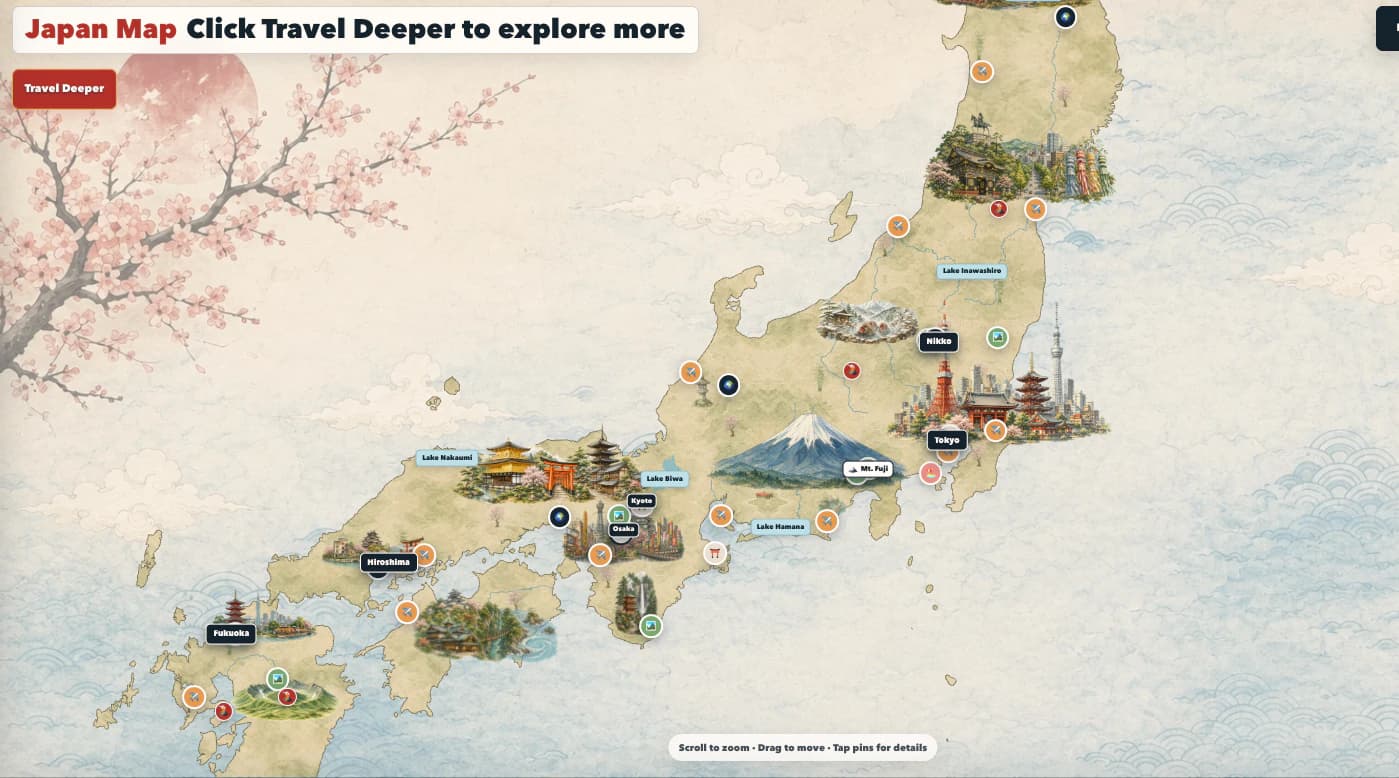
The Itinerary Builder gives those decisions one calendar, while the Interactive Map of Japan helps you see where places actually sit before you commit them to a day.
Use the map before you fill the calendar
Most expensive planning mistakes start as geography mistakes. A place may sound close because it is in the same city, but the journey can still involve a long train ride, a difficult transfer, a mountain road, a ferry, or a timed ticket that makes the day awkward.
Use the Interactive Map of Japan to compare regions, open a prefecture, filter the places you care about, and save the strongest ideas before placing them in the itinerary.
Read the full guide to using the interactive map when you are ready to build a map-based planning workflow.
Keep the details together instead of scattered across apps
A plan becomes stressful when the route is in one spreadsheet, hotel confirmations are in an inbox, ticket links are buried in browser tabs, and the daily schedule is somewhere else entirely. You do not need more information. You need the right information attached to the day and event where you will need it.
Use event notes for ticket links, station names, reservation details, meeting points, luggage instructions, or a reminder about when a venue opens. Use trip-wide notes for travel insurance, rail-pass reminders, connectivity details, or last-minute packing tasks. Use the budget calculator to keep the big categories visible as the plan develops.
That is the quiet advantage of planning the trip yourself with a dedicated workspace: you understand the decisions, can change them as prices or reservations evolve, and do not have to decode someone else's template while you are traveling.
You do not have to start from a blank page
Independent planning does not mean inventing every detail alone. Use prebuilt itineraries to see a practical starting rhythm for a destination, then adjust the route around your dates and interests.
Premium members can save unlimited itineraries, work from the prebuilt route library, and use Auto Generate Itinerary for a fuller first draft. Learn about Japan Trip Planners Premium when those advanced planning tools suit your trip.
The best Japan itinerary is not the most packed one. It is the one that gives you a realistic route, leaves room to enjoy the places you chose, and makes the next decision clear when the day changes.
Start planning your Japan trip for yourself
Begin with the city or region you are most excited about. Open the map, save a few places, create a blank itinerary, and add the dates and hotel nights you already know.
Start your itinerary, explore the Interactive Map of Japan, or browse the Japan travel guides when you want a little more direction.
For most travelers, the answer is simple: no, you do not need to pay hundreds of dollars just to plan a meaningful Japan trip. Start with Japan Trip Planners, make the route your own, and spend the money where it will matter more to you in Japan.
Travel details can change. Confirm current schedules, opening hours, reservation rules, prices, and entry requirements with the relevant official provider before booking or traveling.