
Things to Do in Nikko: Shrines, Waterfalls, Lakes, and a Better Day Trip
Nikko is one of Tokyo's most rewarding escapes, but it is not a quick collection of shrine photos. Give the mountain roads, temple grounds, lake country, and seasonal weather enough room to make the day feel calm rather than compressed.
Build the route around the place, not just the pin.
Nikko has two very different layers: the UNESCO-listed shrine and temple area close to town, and the higher mountain country around Lake Chuzenji, Kegon Falls, and Oku-Nikko. Trying to do both at peak pace in a rushed day creates more bus time than sightseeing. Decide first whether the trip is about the historic complex, the lake and waterfalls, or an overnight that allows both.
From Tokyo, leave early and use the first morning for the most time-sensitive stop. The ornate Toshogu area, Shinkyo Bridge, forest walks, and town food can make a satisfying day on their own. Add the mountain road only when the weather, bus schedule, and your energy leave enough margin.
Things to Do in Nikko for a well-paced trip.
Central Nikko
Toshogu, Rinno-ji, and Futarasan Shrine
Use the morning for Nikko's shrine-and-temple district, where detailed architecture, cedar forest, and connected grounds reward a slower visit more than a fast checklist.
Central Nikko
Shinkyo Bridge and the approach to town
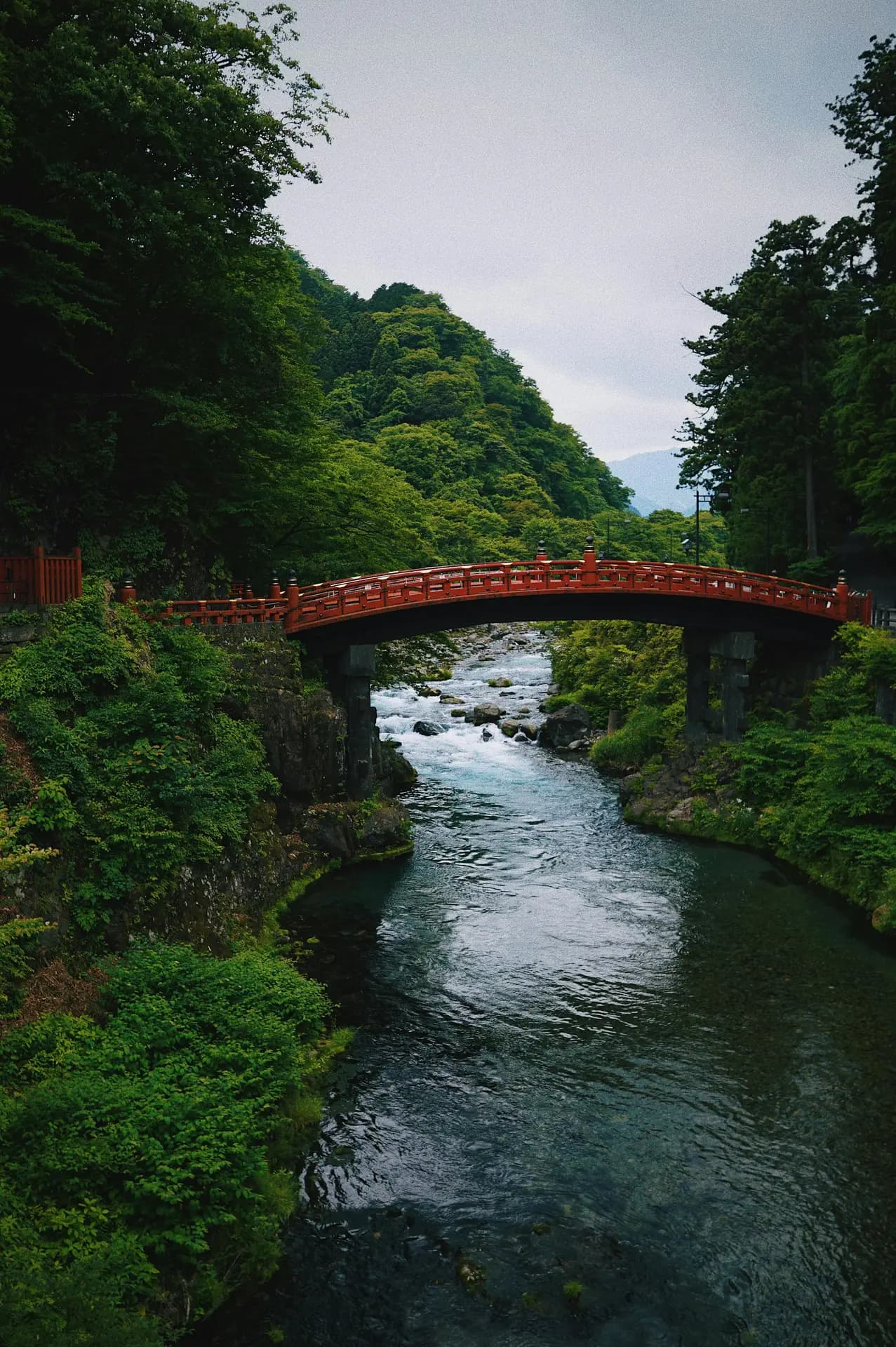
The vermilion bridge makes a natural arrival or departure stop. Pair it with the nearby heritage district instead of crossing town for a separate photo-only detour.
Oku-Nikko
Lake Chuzenji and Kegon Falls
The lake-and-waterfall route deserves its own transport block. It is beautiful in different seasons, but road traffic, weather, and higher-elevation conditions should shape the day.
Yumoto and beyond
Onsen and forest time
An overnight opens up quieter trails, hot springs, morning lake light, and seasonal landscapes that are difficult to enjoy on a same-day Tokyo return.
Interactive Map of Japan
Explore the route before you commit it to a day.
Use the public map to explore the locations, transport context, and nearby places that can help a day feel connected.
- Toshogu Shrine
- Shinkyo Bridge
- Lake Chuzenji
- Kegon Falls
- Nikko Station
Planning decisions that protect the trip.
Choose one Nikko focus before you leave Tokyo
A temple-focused day and an Oku-Nikko nature day both work. Doing every major stop in one day can work only with early trains, realistic bus buffers, and a willingness to skip something if traffic or weather changes.
Treat mountain bus time as part of the experience
The route from central Nikko to Lake Chuzenji is scenic but can be slow at busy times. Keep a flexible plan, check current transport conditions, and never schedule an inflexible Tokyo evening immediately after a packed mountain day.
Plan for temperature changes
Nikko's higher areas can feel noticeably cooler than Tokyo. Bring a layer, rain protection, and footwear that works for wet paths or a longer walk.
Go deeper with a guide.
Keep the practical details close.
Answers before you book.
Can Nikko be a day trip from Tokyo?
Yes. Start early, choose a clear focus, and keep the final return flexible. An overnight is better if you want both the shrine district and the Lake Chuzenji or onsen areas without rushing.
What should I prioritize in Nikko on a first visit?
Toshogu and the surrounding shrine-and-temple district are the strongest first priority. Add Shinkyo Bridge naturally, then choose the lake and waterfall route only when the day's travel time allows it.
When is the best time to visit Nikko?
Nikko is appealing year-round, with particularly dramatic seasonal color and cool mountain air. Conditions differ significantly by elevation, so check current weather and transport before a nature-focused visit.