
How to Use Coin Laundry in Japan Hotels and Laundromats
A practical guide to washing and drying clothes during your Japan trip.
In this article
Affiliate disclosure: Some links in this article may earn Japan Trip Planners a commission at no extra cost to you. Recommendations are included when they are genuinely useful for planning, and you should still compare current prices, terms, and official provider information before booking.
How Does Coin Laundry Work in Japan?
To use coin laundry in Japan, identify the machine, check its detergent instructions, load suitable clothes within the course limit, select washing or washing-and-drying, and pay as directed. For separate machines, move the washed clothes to a dryer afterward. Check they are dry before packing them away.
The important part is reading the instructions before inserting money. Some machines start automatically when the full amount is paid; others use a Start button or a central payment terminal. There is no single button sequence that works in every Japanese hotel or laundromat.
A laundry stop can make a longer trip much easier: you can reuse everyday outfits instead of carrying a clean change for every day. You do not need to turn it into a complicated excursion, but you do need enough time to wash, dry and collect everything before your next reservation.
Hotel Laundry Rooms vs Neighborhood Coin Laundries
A hotel coin laundry is a self-service facility, usually intended for the property's guests. It is not the same as the laundry bag and price list in your room: those may belong to a staffed cleaning service that charges by item and has its own collection deadlines. Ask which service you are looking at before handing over your clothes.
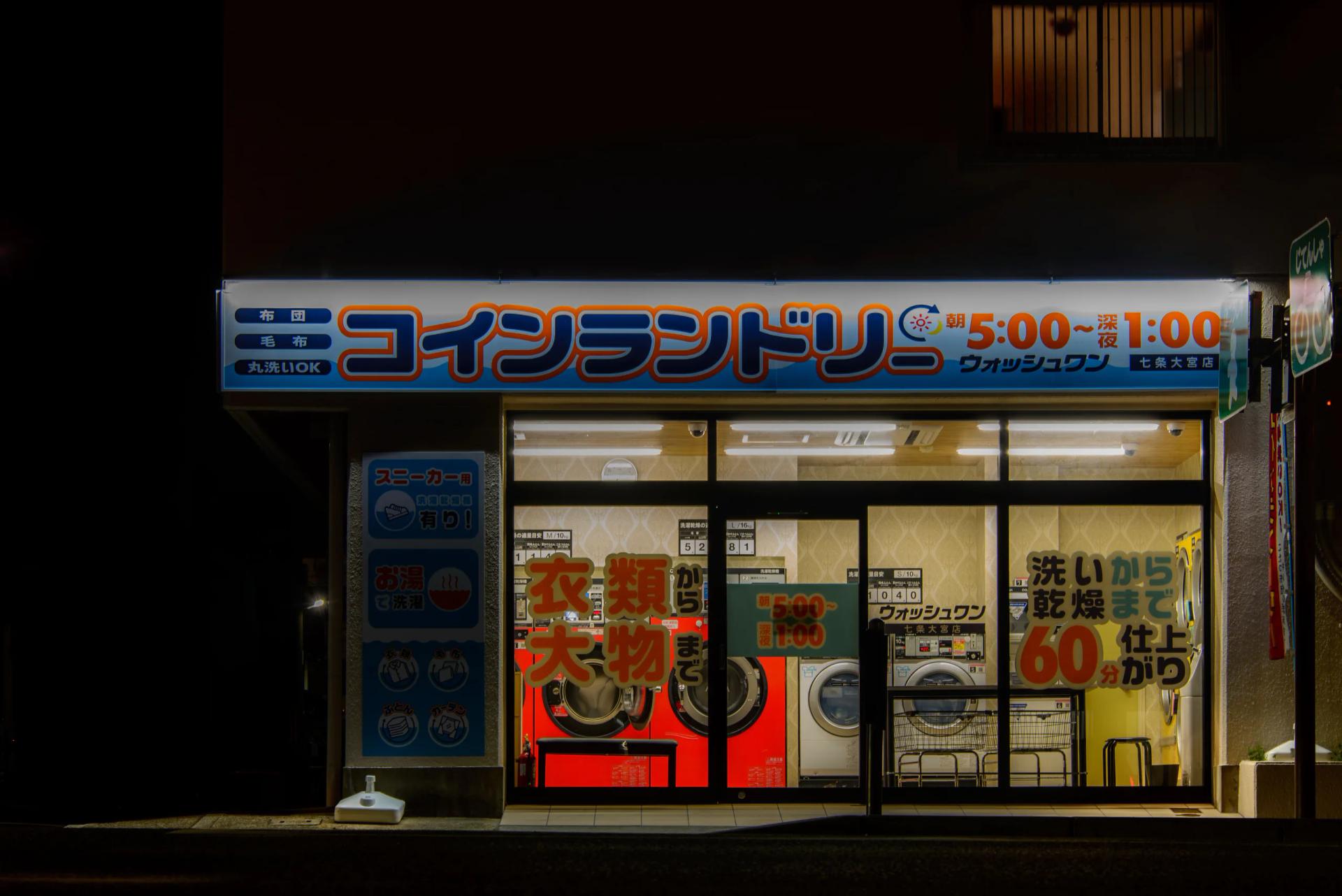
A neighborhood coin laundry, or koin randorii, is a separate business you visit yourself. Check its opening hours, payment methods and available equipment. The word coin does not guarantee coins are the only option, and a bright storefront does not mean the shop is open all night.
Before walking out with a bag, check your hotel's floor guide or ask reception whether there is a guest laundry. If choosing accommodation for a longer stay, confirm that self-service machines are actually available rather than relying on the vague phrase laundry service in a listing. Our Japan accommodation guide explains other practical details worth comparing.
What to Bring and Check Before Paying
Start with clothes you know can be machine washed. Empty every pocket, check for tissues and separate items that could transfer color. Keep your hotel key, phone and payment outside the laundry pile. Bring a bag for carrying clothes back and a way to note the machine number and finish time.
Look at the whole instruction panel, not just the biggest price. Check whether the course includes drying, whether detergent is automatic, and whether a combination machine has a smaller limit for washing-and-drying than for washing alone. A large drum is not an invitation to cram everything inside.
If the machine offers an empty-drum rinse or cleaning function, follow its instructions before loading clothes. The timing differs: some equipment requires payment first, while other equipment offers a separate free cleaning button. Do not run a drum-cleaning cycle with your clothes or detergent inside.
First Identify Which of These Three Machines You Have
The same room can contain several kinds of equipment. A front-loading door alone does not tell you whether a machine washes, dries or does both. Read the course labels and the instructions next to its number.
- Washer: 洗濯機. Washes, rinses and spins; a spin cycle removes water but does not leave clothes fully dry.
- Dryer: 乾燥機. Dries already-washed clothes. It does not wash them, and detergent does not belong inside.
- Combined washer-dryer: 洗濯乾燥機. Can offer a full wash-and-dry course, wash only or dry only. Owning both functions does not mean every available course uses both.
How to Use a Separate Washing Machine, Step by Step
Use the following as a checklist, then follow the order printed on your particular machine. Do not insert coins simply to see what happens. Once a paid program begins, the door may lock and changing your mind can require operator assistance.
- 1. Check the drum is empty and suitable to use. If there is a problem or another person's laundry, ask staff or follow the posted procedure.
- 2. Read the detergent notice. If detergent is automatic, do not add your own. If it is not, use only the product, amount and compartment specified by the machine or hotel.
- 3. Load the clothes within the marked limit. Keep fabric clear of the door seal and close the lid or door securely.
- 4. Select the appropriate washing course where required. Check the price and displayed duration before confirming.
- 5. Pay using the accepted method. At a central terminal, confirm the correct machine number. Press Start if instructed; other machines begin automatically after payment.
- 6. Note the finish time and return promptly. Move the washed clothes to a suitable dryer or arrange permitted air drying.
How to Use a Combined Washer-Dryer
Choose 洗濯乾燥, washing and drying, if you want the machine to do both stages. 洗濯 is washing only; 乾燥 is drying only. Check the selected course rather than assuming the machine will automatically choose the full program.
Follow the capacity shown for that course. If the panel lists different wash and dry limits, the larger wash-only number is not the amount to load for a full wash-and-dry program. Clothes need space for drying, and an overloaded load can finish damp.
If a hotel machine asks you to create a retrieval code, choose one you can remember and keep it private. Record the machine number separately. Do not share a photograph of the code online or assume hotel reception can recover it without checking the machine's procedure.
How to Use the Dryer Without Paying for the Wrong Drum
Check the clothes' care labels before using heat. Take out anything that cannot be tumble dried, then load the remaining washed clothes into the correct dryer. Untangle bundled garments so they can move, and follow the dryer's load limit rather than transferring an overfilled wash into an equally overfilled drum.
Stacked dryers deserve an extra check. 上 means upper and 下 means lower. Some stacks share controls; others have separate coin slots. Trace the number and buttons to your actual door before paying. Choose the permitted heat setting and time, then press the appropriate button if required.
Return when the cycle finishes and check thicker areas such as waistbands, seams and pockets. If they are still damp, follow the instructions for a short extra drying period, provided the garments allow it. Lower heat is not a guarantee against damage, and extra paid time is not a substitute for reducing an oversized load.
Do You Need to Bring Detergent or Fabric Softener?
Often you do not, but check the exact machine. 洗剤自動投入 means detergent is dispensed automatically. It does not mean you should put a laundry pod in as well. Adding extra product to an automatically dosed machine can cause excessive foam or other operating problems.
Detergent and softener are separate questions. A machine can include detergent without adding softener; another may add both or offer a no-softener option. If scent or a particular ingredient matters, ask about the supplied products before starting. Do not assume an automatic system has a fragrance-free course.
Where manual detergent is required, check whether it is sold by the hotel or store, what type is suitable and where it goes. Avoid improvising with hand soap, shampoo or dishwashing liquid. A hotel-room washing machine can also work differently from the paid equipment downstairs, so read its own instructions.
Payment, Laundry Costs and How Much Time to Allow
Have suitable coins available as a backup. Check the accepted denominations before loading; do not assume a machine takes every Japanese coin or returns change. A change machine may accept only particular notes, and some shops use a central terminal, prepaid card or app instead. Confirm the method you can actually use before committing to a load.
Treat prices as property-specific, not a nationwide tariff. As checked on November 23, 2026, Henn na Hotel Maihama Tokyo Bay's official FAQ lists a wash at 500 yen for 40 minutes and drying at 100 yen per 10 minutes. WASHHOUSE's published estimates include clothes washing from 300 yen, around 35-46 minutes, and drying at 100 yen per 7-10 minutes, with shop and time variations.
For a simple budgeting example, a 500-yen wash plus three 100-yen dryer periods costs 800 yen. That arithmetic does not promise your clothes will be dry after those three periods. Compare the load size, included stages and drying time, not just the lowest displayed starting price.
Use the machine's estimate to plan your return, with time for a queue, moving the load, extra drying and folding. A one-hour combined course can still take longer door to door. Avoid starting a load shortly before checkout, a timed attraction or the store's closing time.
Useful Japanese Laundry Labels and Buttons
A translation tool can help with the full panel, but these words explain many of the choices. Photograph or read the controls without including other customers or their belongings, and ask for clarification if the translated instructions conflict with the machine's sequence.
- コインランドリー / Koin randorii: Coin laundry or laundromat.
- 洗濯 / Sentaku: Washing. 乾燥 / Kansou: Drying. 洗濯乾燥 / Sentaku kansou: Washing and drying.
- 洗剤 / Senzai: Detergent. 柔軟剤 / Juunanzai: Fabric softener. 自動投入 / Jidou tounyuu: Automatically dispensed.
- 洗浄 / Senjou: Cleaning. 槽洗浄 / Sou senjou: Tub cleaning; not the same as washing your clothes.
- 両替 / Ryougae: Changing money. 両替機 / Ryougaeki: Change machine.
- 上 / Ue: Upper. 下 / Shita: Lower. Confirm the corresponding drum before paying.
- 高温 / Kouon: High temperature. 中温 / Chuuon: Medium temperature. 低温 / Teion: Low temperature.
- 残り / Nokori: Remaining. 分 / Fun or pun: Minutes. 終了 / Shuuryou: Finished.
- スタート / Sutaato: Start. 一時停止 / Ichiji teishi: Pause; do not assume it cancels the paid program.
Protect Your Clothes: Care Labels, Shoes and Special Items
Check both the washing symbol and the drying symbol. A garment that can be machine washed may still prohibit tumble drying. A crossed-out circle inside a square means do not tumble dry; a low-temperature setting does not override that prohibition. Treat wool, silk, delicate decorations and unfamiliar technical clothing cautiously and follow the garment's own care label.
Do not put shoes into an ordinary clothing washer simply because they fit. Some laundromats have dedicated sneaker washers and dryers, but the equipment still has restrictions on materials, construction and load size. Do not assume leather shoes, glued components or every type of sneaker can use them.
Leave the hotel's towels, bedding and supplied garments to the property unless staff explicitly tell you otherwise. For your own specialist or dry-clean-only items, ask about an appropriate staffed service. A laundromat's large bedding machine is not a reason to experiment with expensive clothing during your holiday.
Laundry Etiquette in Hotels and Public Shops
Set a timer and collect your load promptly. An unattended finished machine can block the only available washer in a small hotel. Keep your possessions with you, leave folding surfaces clear when you finish, and do not use baskets to reserve equipment while you leave to get money.
If someone else's clothes are inside, follow the posted procedure or ask the hotel or operator what to do. Some businesses have rules for removing finished loads, but that is not universal permission to handle strangers' belongings. Do not put another person's laundry on the floor.
If you step away, remain close enough to return when the machine finishes, follow the store's rules and do not leave valuables behind. A timer is a reminder, not proof the program has finished: pauses or a cooling stage can change the pickup time. Keep children away from moving doors and hot equipment.
What If the Machine Will Not Start or Clothes Are Still Damp?
Before paying again, check the course selection, door closure, accepted payment and machine number. A rejected coin is not an instruction to force it into the slot. If a paid machine has an error, photograph the displayed code, note what you paid and contact hotel reception or the support number posted at that location. Do not dismantle the controls or force a locked door.
Damp clothes do not automatically mean the machine is broken. First check whether you bought wash only, then consider load size, heavy fabrics and the paid drying time. Follow the machine's instructions for extra drying if the clothes allow it. If a combined load is too large, ask staff how to proceed rather than trying to unlock it mid-cycle.
If you chose the wrong machine or course, stop making further payments and ask for help. The operator may have a way to assist, but cancellation, restarting or a refund is not guaranteed. A temporarily still drum or a cooling-down message is also not automatically a fault; read the display before intervening.
- この洗濯機の使い方を教えてください / Kono sentakuki no tsukaikata o oshiete kudasai: Please show me how to use this washing machine.
- 洗剤は自動で入りますか / Senzai wa jidou de hairimasu ka?: Is detergent added automatically?
- コースを間違えました / Koosu o machigaemashita: I selected the wrong course. Show the machine number and payment details.
Where Laundry Fits in a Japan Itinerary
Pick a stay where you have enough time to finish a load without relying on the last possible evening. A two-week trip might need more than one laundry opportunity depending on weather, activity level and how much you pack. Keep an emergency clean outfit so a busy laundry room does not derail the next morning.
For example, a Tokyo hotel evening before a relaxed local day leaves more recovery time than the hour before an intercity train. On a family trip, check machine capacity and the number of loads rather than assuming everyone's clothes will fit together. Allow separate drying for garments that cannot share the same heat setting.
Put the laundry block, location and collection reminder into your Japan itinerary. Our first-trip logistics checklist covers other useful preparations, and the Japanese travel phrases guide can help with everyday requests. The aim is not to schedule every minute of housekeeping; it is to stop a small practical task from competing with the things you came to Japan to enjoy.
Frequently Asked Questions About Coin Laundry in Japan
Do all Japanese hotels have washing machines? No. Confirm the exact property and whether laundry means self-service machines, an in-room washer or a staffed cleaning service. Also check access hours and who is allowed to use the facility.
Can you use a hotel's laundry if you are not staying there? Do not assume so. Guest laundry facilities can be restricted to registered guests. Use a public laundromat or obtain the property's explicit permission.
Are dryers included in the washing price? Only if the chosen course says so. A separate washer generally leaves you with wet, spun clothes, while a combined machine can offer wash-only as well as wash-and-dry options.
Can you pay with a credit card or Suica? Only where that machine or terminal specifically accepts it. App payment, card payment and transit IC payment are different systems. Keep a suitable cash backup rather than assuming one cashless method works everywhere.
Can you dry clothes in your hotel room? Ask what is permitted and use any designated drying facility as instructed. Do not block ventilation, cover heaters or hang things from fire-safety equipment. Not every room has a bathroom drying function, and washing a garment does not guarantee it will air-dry before checkout.
Should you add more detergent if you cannot see foam? Not just for that reason. An automatically dosed machine does not need extra detergent because the drum looks less foamy than expected. If you suspect a supply or operating problem, ask staff or the operator.
Travel details can change. Confirm current schedules, opening hours, reservation rules, prices, and entry requirements with the relevant official provider before booking or traveling.