
Best Time of Year to Visit Japan: A Guide to Every Season
Cherry blossoms, summer festivals, autumn gardens, or snowy hot springs? Japan is beautiful and unique in every season. Choose the time that fits the trip you want.
Affiliate disclosure: Some links in this article may earn Japan Trip Planners a commission at no extra cost to you. Recommendations are included when they are genuinely useful for planning, and you should still compare current prices, terms, and official provider information before booking.
When is the best time of year to visit Japan?
For a first trip built around Tokyo, Kyoto, and Osaka, spring and autumn are often the easiest starting points: roughly March-May and October-November, depending on your dates and preferred weather. They combine seasonal scenery with conditions that can suit long sightseeing days. Late March and April attract cherry-blossom travelers, while November is a popular choice for autumn gardens.
But there is no single season that makes every other month a compromise. All times of the year are beautiful and unique in Japan. Summer brings festival evenings, fireworks, green mountains, and island adventures. Winter offers snow landscapes, steaming hot springs, illuminations, and New Year traditions. Even a rainy June day can become a memorable mix of hydrangeas, a museum, and a long lunch.
The useful question is not simply 'Which month is best?' It is 'What do I want to do, where do I want to go, and what conditions will I enjoy?' Choose the experience first, then match the region and month to it. A winter ski trip and a warm-weather Okinawa trip need very different calendars.
- Cherry blossoms: often late March-April in Tokyo and Kansai; later in northern areas, with timing changing each year.
- Comfortable city sightseeing: consider May after Golden Week, or October-November, without expecting identical weather everywhere.
- Festivals and fireworks: July-August offer many choices, with heat and busy event dates to plan around.
- Autumn leaves: northern and higher areas turn earlier; Tokyo and Kyoto often suit November visits.
- Snow and skiing: January-February are common choices in established snow destinations, subject to resort conditions.
Spring in Japan: cherry blossoms, hanami, and fresh greenery
Spring, usually described as March-May, is more than a few weeks of pink trees. Early spring can still feel wintry, especially in the morning or farther north. As the season progresses, gardens fill out, hillsides become greener, and outdoor wandering becomes easier in many cities. Pack layers rather than assuming every April afternoon will be warm.
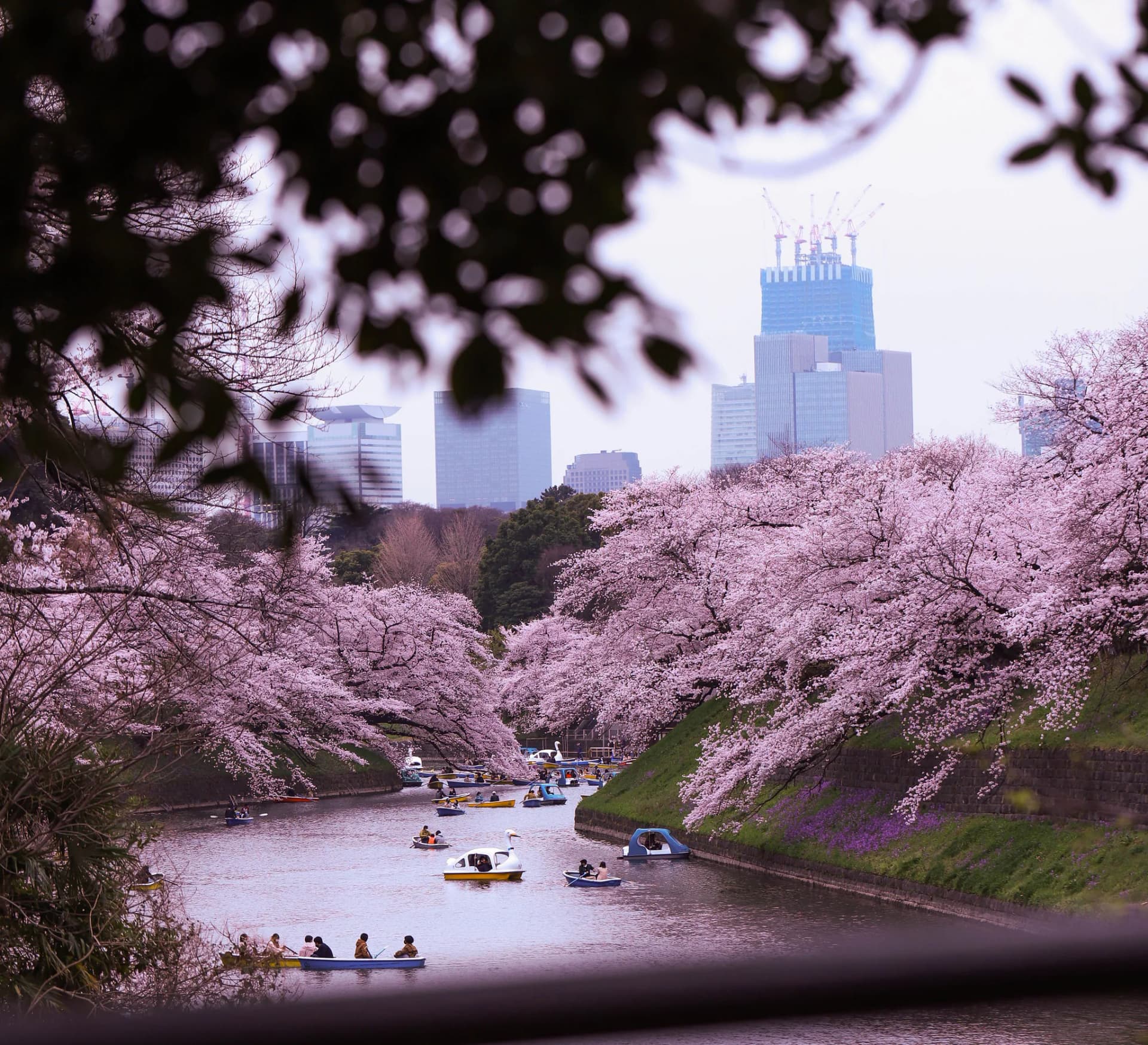
Hanami means flower viewing and is strongly associated with cherry blossoms. People enjoy the trees on walks, at organized light-up events, or over a picnic where the park allows it. You do not need an elaborate plan to participate: a riverside stroll and a simple snack can be enough. Follow posted picnic rules, do not touch or shake branches, and take rubbish away.
For Tokyo, Kyoto, and Osaka, late March through April is a useful starting window for cherry-blossom planning, not a guarantee of peak bloom. Weather, location, and tree variety all matter. Northern destinations can bloom later, extending into late April or May; Okinawa's early-blooming cherries follow a different winter calendar. Book a trip you will enjoy even if the petals arrive earlier or later than expected.
Spring traditions include Hinamatsuri on March 3, with decorative doll displays celebrating girls, and Children's Day on May 5, associated with colorful carp streamers. Children's Day is a national holiday; Hinamatsuri is not. Later spring also brings festivals and fresh greenery, so missing the cherry blossoms does not mean missing spring. May after Golden Week is worth considering if flowers are a bonus rather than the purpose of your trip.
- Build blossom viewing into an otherwise enjoyable neighborhood day instead of making every stop depend on peak bloom.
- For popular spring dates, compare hotel availability before committing to flights and keep cancellation terms in mind.
- Give one garden or riverside area time to breathe; racing between five blossom spots can mean spending more time in transit than under the trees.
Summer in Japan: festivals, fireworks, beaches, and mountain escapes
Summer, June-August, has a lively character of its own. June often brings the rainy season, known as tsuyu, to much of mainland Japan, sometimes continuing into July. Okinawa's rainy season usually starts earlier. Hokkaido is less affected by the typical rainy-season pattern, but it is not rain-free. Rainy season does not mean every day is a washout: plan flexible outdoor time and a nearby indoor alternative.
July and August can be very hot and humid in cities such as Tokyo, Kyoto, Osaka, and Fukuoka. This changes what a comfortable itinerary looks like. Keep the longest walks for earlier hours, take a substantial indoor break, carry water, and leave room to cancel a strenuous plan in extreme heat. Families and travelers sensitive to heat should not treat a full summer sightseeing day like an April one.
The reward is a season full of matsuri, or festivals. Kyoto's Gion Matsuri and Fukuoka's Hakata Gion Yamakasa are July highlights. Summer celebrations can include floats, music, food stalls, yukata, and fireworks, although each event has its own program. Tanabata is associated with wishes written on paper strips and hung on bamboo; many observances are in July, while some major celebrations take place in August.
Obon honors ancestors and is associated with family visits and Bon Odori dancing. Many places observe it around mid-August, but dates differ by region and tradition. It is not a nationwide statutory public holiday, yet it can generate major travel demand. Do not assume a festival invitation includes every religious activity; observe respectfully and join only where participation is welcomed.
Summer can also mean hydrangeas in Kamakura, a Hokkaido nature trip, or beach time in Okinawa. Choose swimming areas and activities with appropriate local supervision, and check weather before going out on the water. Typhoons can disrupt flights, ferries, and outdoor events, so avoid placing a remote-island connection immediately before your international departure.
- Anchor a festival night with its confirmed location, admission arrangements, and a workable return journey.
- Reserve event-night accommodation early when you know you want a particular festival; summer is not automatically a cheap season.
- Pair outdoor mornings with museums, covered shopping areas, cafes, or another indoor stop instead of stacking hours of exposed walking.
Autumn in Japan: colorful leaves, harvest flavors, and cooler walks
Autumn is usually grouped as September-November, but September can still be hot and humid in much of Japan. It also deserves attention for rain and typhoon disruption. October and November often become more comfortable for walking, though northern and mountain destinations turn cold sooner. Pack for the coldest part of your actual route, not just the city where you land.
Autumn leaf viewing, often called momijigari, means seeking out and appreciating changing leaves. Maples and ginkgo trees give temples, gardens, lakesides, and ordinary streets different colors. The season moves from cooler northern and higher places toward warmer areas. Tokyo and Kyoto often show their best colors during November, with some locations continuing into early December; exact timing varies.
Tsukimi is the tradition of admiring the autumn moon, with observances following the lunar calendar rather than one fixed date on the calendar most travelers use. Harvest celebrations and seasonal foods add another reason to visit: look for chestnut sweets, persimmons, pears, and rice-focused dishes. This is an excellent season to slow down for a garden, a neighborhood meal, and an evening walk rather than trying to fill every hour.
Culture Day on November 3 and Labor Thanksgiving Day on November 23 are national holidays. September holiday combinations can also create busy stretches sometimes called Silver Week, but a long consecutive break does not happen the same way every year. Popular foliage locations and holiday weekends can be crowded even when the weather is comfortable.
October also brings modern Halloween events. These are separate from Japan's traditional seasonal festivals, and Halloween is not a national holiday. Our Halloween in Japan guide explains the celebrations and the local restrictions travelers should check.
Winter in Japan: snow, hot springs, illuminations, and New Year
Winter, December-February, can feel like several different trips within one country. Hokkaido and snowy mountain or Sea of Japan regions offer winter landscapes and ski destinations. Tokyo and Osaka are cold but are not reliably snowy; clear winter days are common on the Pacific side, although rain or snow can still arrive. Okinawa is milder, but winter there is not the same as guaranteed summer beach weather.
If snow is your main goal, choose an established snow destination such as Hokkaido, Nagano, or Niigata rather than hoping it falls during a Tokyo city break. January and February are popular months for skiing and snowboarding; resort openings and usable conditions still depend on the year. Sapporo's Snow Festival usually takes place in February and can make accommodation especially busy. Check the announced schedule before fixing your stay.
Winter is also a wonderful time to plan a ryokan or onsen stay, enjoy a hot meal after exploring, and see city illuminations. Keep outdoor days shorter and build warm breaks into them. Snowy trips need footwear with suitable grip and more time for transfers; mountain roads, buses, and trails may have seasonal restrictions. A scenic place visible on a map is not necessarily accessible in winter.
New Year, or Oshogatsu, is an important family and cultural occasion. Hatsumode is the first shrine or temple visit of the year, while some temples hold year-end bell-ringing ceremonies. Visitors can enjoy the atmosphere respectfully, but access and participation vary. Coming of Age Day falls on the second Monday of January. Christmas decorations and seasonal entertainment are common, but December 25 is not a Japanese national holiday.
Year-end and early-January travel requires a different plan from an ordinary winter week. Some museums, restaurants, gardens, and shops close or shorten hours, while major shrine visits and intercity journeys can be busy. Confirm each essential stop and at least one dependable meal option; do not assume every business is closed or every attraction is open. Our Christmas and New Year vacation guide walks through those practical checks.
Japan month by month: a quick planning calendar
Use this as a starting point, not a nationwide forecast. Your region, elevation, exact dates, and the year's conditions can shift both weather and seasonal highlights.
- January: New Year traditions, hot springs, and snow trips. Check holiday closures and busy early-month transfers.
- February: skiing and snow festivals in suitable regions, with some early blossoms farther south. Pack for genuine winter conditions on the mainland.
- March: early spring, Hinamatsuri, and the beginning of the main blossom period in some cities. Expect changing temperatures.
- April: cherry blossoms in many areas and increasingly green gardens. Peak bloom is brief and varies by destination.
- May: fresh greenery, Children's Day, and spring festivals. Golden Week is busy; Okinawa's rainy season can begin this month.
- June: hydrangeas and rainy-season scenery in many regions. Keep indoor alternatives; Hokkaido has a different rainfall pattern.
- July: major festivals, Tanabata observances, and summer outings. Expect heat and humidity as the mainland rainy season winds down.
- August: fireworks, Bon Odori, and lively summer evenings. Account for Obon demand, strong heat, and possible storm disruption.
- September: a transition month with lingering warmth, autumn moon viewing, and earlier colors in some colder areas. Check holiday clusters and weather.
- October: cooler sightseeing in many regions, harvest celebrations, and northern or higher-elevation foliage. Storms are still possible.
- November: autumn gardens in Tokyo and Kyoto, national holidays, and colder evenings. Popular leaf-viewing areas can be very busy.
- December: illuminations, winter food, and the start of snow season in some destinations. Separate a pre-holiday city trip from a New Year itinerary.
Match the season to Tokyo, Kyoto, Hokkaido, or Okinawa
A national season label only tells you so much. For Tokyo, Kyoto, and Osaka, a sightseeing route can work throughout the year if you change the pace: longer garden walks in milder weather, more indoor breaks in summer, and warm pauses in winter. Kyoto's famous spring and autumn sights can be busy, so choosing fewer stops in one area matters as much as choosing a month.
Hokkaido offers a different reason to go in each part of the year. Winter supports snow-focused trips; summer can suit nature travel without the same typical rainy-season pattern as the mainland. Spring blossoms arrive later and autumn colors can arrive earlier than in Tokyo. Check local trail and transport access rather than assuming a July route also works in February.
For Okinawa, decide whether the priority is swimming, cultural sights, island hopping, or simply a milder winter break. Rain, wind, typhoons, sea conditions, and operator schedules matter more than a generic 'best season' label. A trip based around museums and towns is less weather-dependent than one built entirely around boats and snorkeling.
You do not need to stretch one holiday from Hokkaido to Okinawa to make it worthwhile. Choose a compact route that fits the season and your interests, then use a few nearby alternatives to keep it flexible.
Which Japan holidays and busy periods should you plan around?
Three periods deserve an early check: Golden Week in late April and early May, Obon in many regions around mid-August, and the year-end/New Year period. Golden Week combines national holidays including April 29 and May 3-5, with the length of the practical travel break changing according to weekends and substitute holidays. For your trip year, check the actual calendar rather than copying last year's dates.
Busy does not mean you cannot go. It means hotel choices, reserved trains, attraction entry, and road traffic deserve more attention. Keep essential reservations together, leave extra time for transfers, and avoid moving hotels on every peak day. Local festivals, school holidays, foliage weekends, and major snow events can also make one destination busy while another is quieter.
There is no universally cheapest month for Japan. A quieter city week can overlap with expensive ski accommodation or a packed local festival. Compare complete flight-and-hotel totals for a few possible dates, not just the nightly rate from one search. May after Golden Week and ordinary winter city weeks outside major events are possibilities to price, not promises of low costs.
When comparing hotels and activities, check cancellation terms and what is actually included. Our Booking Resources page brings relevant booking options together, and the free Money Savings Guide can help you build a budget around your own dates.
Build a Japan itinerary that works with your season
Start with two or three experiences you genuinely care about. If they are cherry blossoms and traditional streets, choose a spring route you would enjoy with or without peak bloom. If they are snowboarding and hot springs, put snow regions at the center of the plan. If festivals are the reason to travel, confirm the event before deciding how many nights to stay.
Next, group nearby places and add one realistic alternative for weather-sensitive days. Keep the alternative in the same area where possible: replacing a garden with a museum across town can create a second planning problem. Leave recovery time after flights and long transfers, and put safety ahead of keeping every reservation in dangerous weather.
Explore our interactive Japan map to find places by prefecture, then use the itinerary builder and prebuilt routes to organize your days. Our 10-day first-time Japan itinerary is a starting point for Tokyo, Kyoto, and Osaka, not a schedule you must follow exactly. Add seasonal stops and adjust the pace to your travel month.
The best time of year to visit Japan is ultimately the time that lets you enjoy your kind of trip. There is beauty in every season, and much more to discover than one blossom week or one famous festival. Keep exploring, choose what excites you, and make room for the places you find along the way.
Best time to visit Japan: frequently asked questions
What is the best month to visit Japan for the first time?
May after Golden Week or October-November are useful starting choices for a city-focused trip if comfortable sightseeing matters most. Choose late March-April for a blossom-focused route, accepting uncertain bloom timing and greater demand.
Is Japan worth visiting in summer?
Yes, especially for festivals, fireworks, greenery, or a carefully chosen beach or mountain trip. Heat, humidity, rain, and storms require a slower, flexible itinerary rather than making summer a bad time to visit.
When is the best time to visit Japan for cherry blossoms?
Often late March-April for Tokyo, Kyoto, and Osaka, with later timing farther north and earlier varieties elsewhere. Peak bloom changes each year; do not treat a month or an early forecast as a guarantee.
When is the best time to visit Japan to avoid crowds?
There is no crowd-free nationwide season. Travel outside major holidays and local events, visit popular sights earlier where opening hours allow, and include less famous nearby places. A winter city trip may be quieter while a ski resort is full.
Does it rain all day during Japan's rainy season?
Not necessarily. There can be dry intervals as well as prolonged or heavy rain, and conditions vary by region and year. Keep an indoor alternative and follow local warnings rather than assuming either constant rain or reliable sunshine.
Is there a worst time to visit Japan?
There is no universally worst month. The wrong match is the problem: a packed outdoor summer schedule for someone who struggles with heat, or a closure-sensitive sightseeing plan at New Year without checking hours. Match the season, region, and pace to your priorities.
Travel details can change. Confirm current schedules, opening hours, reservation rules, prices, and entry requirements with the relevant official provider before booking or traveling.